











Supreme Court allows lighting of Karthigai Deepam at Thiruparankundram
text_fields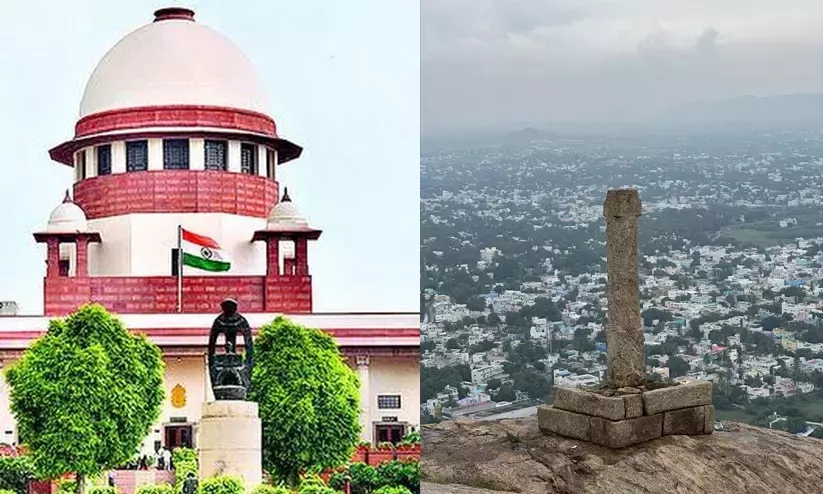

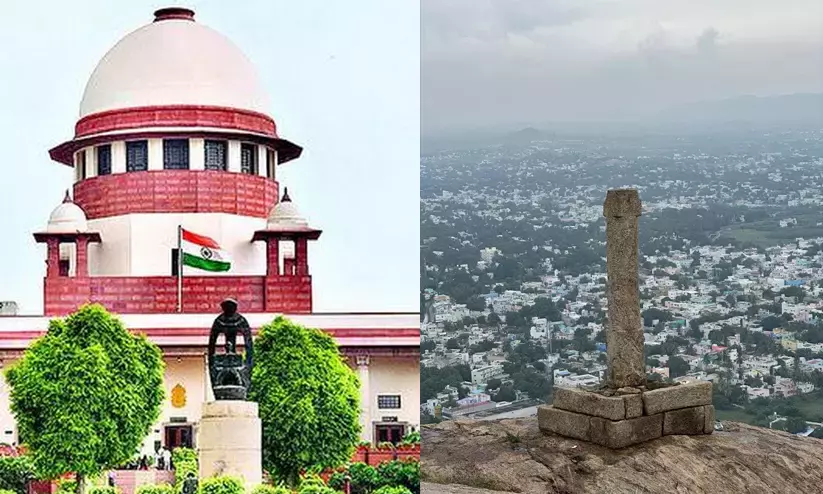
New Delhi: The Supreme Court has permitted the lighting of the Karthigai Deepam on November 24 at the disputed Deepathoon, a stone pillar atop Thiruparankundram hill in Madurai, Tamil Nadu. The ruling challenges Tamil Nadu's opposition to the ritual near the Hazrat Sultan Sikandar Badusha Auliya Dargah on public-order grounds, according to reports.
A bench of Justices Aravind Kumar and Vipul M Pancholi allowed the ceremony as a one-time arrangement for this year’s festival. At the same time, it stayed the Madras High Court judgment that had permitted the ritual at the spot. The Supreme Court made clear that its interim permission does not establish a customary right or allow the ceremony to be repeated there in subsequent years.
The bench also said its order was not a final decision on the nature of the pillar, ownership of the land or the existence of a religious custom. Those issues, along with the legal powers of the institutions concerned, remain open for consideration.
Only authorised representatives of the temple administration and government officials will be allowed to access the site. The temple executive officer, Madurai district collector, police commissioner and Archaeological Survey of India (ASI) will decide the team’s size and composition. The district administration will determine the timing and duration of the ceremony and arrange security, with central forces if required and feasible.
Public gatherings, protests, demonstrations and processions are barred at the site. The court said access to the adjoining dargah and mosque must continue without disruption. No materials or temporary structures can be left behind after the ritual, and excavation, construction or structural alterations are prohibited.
The dispute began with petitions seeking permission to light the lamp at the Deepathoon. In December 2025, a single-judge of the Madras High Court, Justice G R Swaminathan, allowed the plea, directing the temple to conduct the ritual. A division bench upheld that decision on January 6, 2026, rejecting the state’s arguments that the pillar was merely a survey stone and that the ceremony could trigger law-and-order problems. Tamil Nadu subsequently challenged the High Court rulings in the Supreme Court.