






Aadhaar card not proof of date of birth, Delhi High Court rules
text_fields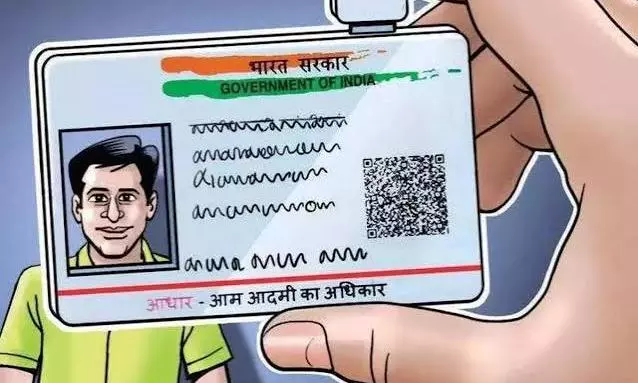

An Aadhaar card cannot, by itself, be relied upon as proof of date of birth, the Delhi High Court has ruled while hearing a plea challenging a labour court order directing a firm to pay a woman worker full back wages after finding that it had illegally terminated her services on the ground that she had reached the age of retirement.
Justice Manoj Kumar Ohri dismissed the employer’s challenge, observing that it had relied solely on the woman’s Aadhaar card to establish her age, without producing any independent document to substantiate the date of birth recorded in it, The Indian Express reported.
The woman had claimed that she had worked as a finishing worker at the firm since 1981, but that the management refused to pay her revised wages after the Delhi government increased the minimum wages for skilled workers in March 2017. She alleged that her services were terminated on May 20, 2017, after she sought payment of her wages for April.
The firm, however, maintained that she had attained the age of 58 in 2017, which was the retirement age followed at its factory, and that her date of birth was in 1959, as recorded in her Aadhaar card. It also claimed that she had voluntarily resigned, accepted the management’s decision and received all her dues.
The labour court rejected the employer’s arguments, noting that its own Employees’ State Insurance Corporation (ESIC) records, prepared when the woman was registered in June 2010, mentioned her date of birth as May 20, 1960. It further observed that no UIDAI official had been examined to establish the basis on which her date of birth was recorded in the Aadhaar card.
Upholding these findings, the High Court noted that the Aadhaar card had been submitted to the management only in March 2017, barely two months before her termination, whereas the ESIC record had been prepared when no dispute appeared to exist between the parties.