

















Shashi Tharoor warns against 'ideological divide' as Centre moves to replace rural employment act
text_fields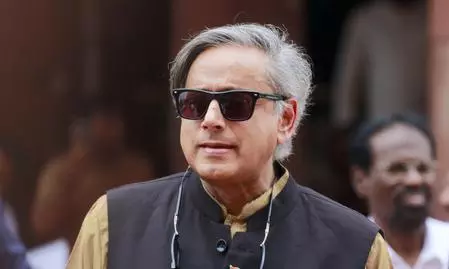

New Delhi: A political storm has brewed over the Indian government's decision to overhaul the country's flagship rural employment scheme, with senior Congress leader Shashi Tharoor accusing the Centre of manufacturing an unnecessary "ideological divide".
The controversy centres on the government's introduction of the Viksit Bharat–Guarantee for Rozgar and Ajeevika Mission (Gramin) Bill, 2025—abbreviated as G-RAM-G. This new legislation is set to replace the existing Mahatma Gandhi National Rural Employment Guarantee Act (MGNREGA), effectively removing the name of the Father of the Nation from the scheme's title.
On Monday, Dr Tharoor described the move as "unfortunate," arguing that the government is pitting the ideals of Mahatma Gandhi against the concept of 'Ram Rajya' when no such conflict exists.
"The controversy over renaming MGNREGA in the government’s proposed new G-RAM-G Bill is unfortunate. The concept of Gram Swaraj and the ideal of Ram Rajya were never competing forces; they were the twin pillars of Gandhiji’s consciousness," Tharoor wrote on social media platform X.
He further cautioned against erasing history for political signalling. "Replacing the Mahatma’s name in a scheme for the rural poor ignores this profound symbiosis. His final breath was a testament to ‘Ram’; let us not dishonour his legacy by creating a division where none existed," he added.
The criticism was echoed by Congress leader Priyanka Gandhi Vadra, who focused on the logistical implications. She questioned the financial wisdom of the rebranding exercise, noting that changing the name across offices and stationery would incur significant public expenditure without adding value to the beneficiaries.
Despite the political friction regarding the name, the proposed G-RAM-G Bill aims to introduce substantial structural changes to the nearly two-decade-old employment framework.
According to the bill listed in the supplementary business for Monday, the legislation seeks to address structural weaknesses in the current system. The most significant update is an increase in the guaranteed employment for rural households, raising the cap from 100 to 125 days annually.
To improve transparency and curb leakage, the new law incorporates artificial intelligence (AI) systems for fraud detection. It also mandates stronger oversight mechanisms, including compulsory social audits twice a year in every Gram Panchayat.
Officials from the Rural Development Ministry indicated that the overhaul is designed to align rural asset creation with broader national development goals. The legislation also aims to directly benefit the agricultural sector by ensuring better coordination of labour availability and improving farming infrastructure.
(Inputs from IANS)