














SC seeks states’ replies on pleas challenging anti-conversion laws
text_fields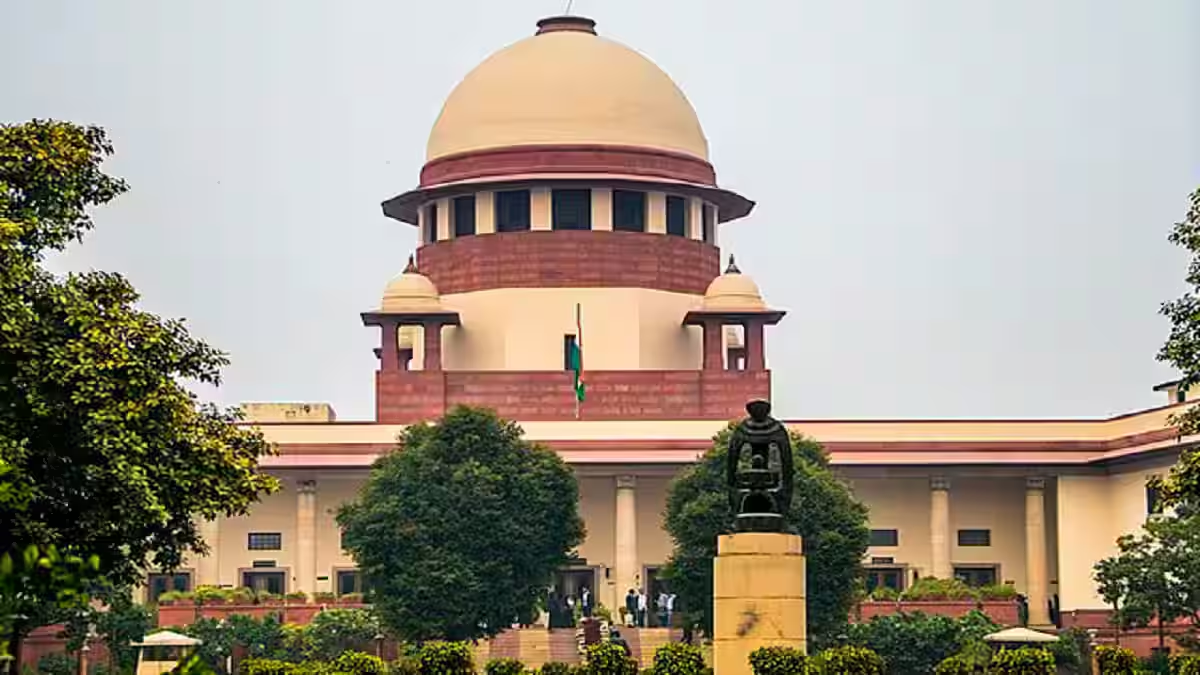

New Delhi: The Supreme Court on Tuesday asked states that have enacted anti-conversion legislation to respond to applications seeking a stay on the controversial laws.
A Bench of Chief Justice of India B.R. Gavai and Justice Vinod Chandran was hearing stay applications filed in a batch of petitions challenging the constitutional validity of anti-conversion statutes passed by Madhya Pradesh, Gujarat, Uttar Pradesh, Uttarakhand and Haryana, among others.
Senior advocate C.U. Singh, appearing for NGO Citizens for Justice and Peace, told the court the main petition has been pending for a long time but has now become urgent because several states are amending their laws to make them more stringent.
Singh highlighted that Uttar Pradesh amended its law in 2024 to raise the minimum sentence for unlawful religious conversion through marriage to 20 years — which can extend to life imprisonment — and imposed twin bail conditions similar to those in the Prevention of Money Laundering Act and the Terrorist and Disruptive Activities (Prevention) Act. The amendment also introduced a reverse burden of proof, he said, making bail virtually impossible in interfaith marriage cases. Rajasthan has also enacted a similar law recently, he added.
He further pointed out that the Gujarat High Court has stayed some provisions of its state’s anti-conversion law, while the Madhya Pradesh High Court has stayed one provision of that state’s Act. The 2024 UP amendment additionally allows third parties to lodge complaints, which Singh said has led to “huge harassment” of interfaith couples and people engaged in routine church observances.
Singh told the court he has filed an application to amend his original petition to include a challenge to the 2024 amendments, which the court allowed.
The Bench directed Additional Solicitor General K.M. Nataraj, appearing for the states, to file their replies to the stay applications within four weeks.