












Rapid redevelopment key to making Mumbai slum-free: CM Fadnavis
text_fields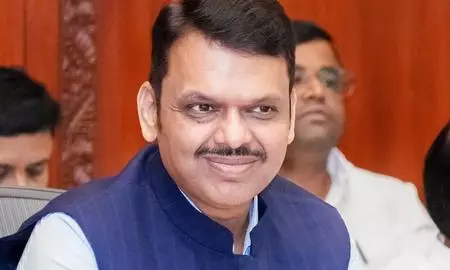

Mumbai: Maharashtra Chief Minister Devendra Fadnavis has stressed the need for fast-tracked redevelopment projects to achieve the goal of a slum-free Mumbai.
Speaking at an event on Thursday, he said projects must be completed within fixed timelines to avoid delays. “If we want to make Mumbai slum-free and carry out redevelopment quickly, we cannot have projects dragging on for decades. Once a project starts, the plot should be readied within a year to a year and a quarter, and the rehabilitation building should be constructed within the next year. Only then will the dream of a slum-free Mumbai come true,” he said.
Fadnavis emphasized that such transformation could be achieved through new ideas, advanced technology and innovative approaches. He noted that large-scale redevelopment was already under way in the city, with the first phase of the BDD Chawl redevelopment handed over to residents on Thursday.
“People who lived for nearly 100 years in 161 sq ft houses are now getting 500 sq ft flats. This is the largest urban redevelopment project in Asia. Along with redevelopment, slum redevelopment offers another major opportunity for Mumbai. Cluster development is also creating new possibilities. Today, Mumbai boasts world-class architecture, iconic buildings, and excellent amenities,” he said.
The Chief Minister also called for adopting cutting-edge construction technologies, noting that an 80-storey building could now be completed in just 120 days. He pointed to major infrastructure works, including the Bandra–Versova Sea Link, which is 60 per cent complete and expected to finish in two years, with extensions planned to Dahisar and later to Bhayandar.
He said the Western Expressway currently carries 60 per cent of Mumbai’s traffic, and a parallel connection from the sea link to Bhayandar–Vasai–Virar is being developed, with future plans to extend it to the port. “All this will open up the entire northern belt for the real estate industry,” he remarked.
Fadnavis added that while preparing Mumbai’s new development plan, various constraints including defense, naval, and forest regulations had to be considered due to the city’s diversity and coastal location.
He also said the Atal Setu had created the opportunity for a “Third Mumbai”, which would include an ‘Edu City’ close to the upcoming Navi Mumbai International Airport. “With the central government allowing foreign universities to set up in India, world-class education can be provided here. On 300 acres, plans are in place to host 12 of the world’s top universities, with land and certain shared infrastructure provided by the government. Agreements have been signed with seven universities, some of which are starting their campuses immediately. A total of one lakh residential students will live here, generating immense economic and social vibrancy,” he said.