












Purnima Devi Barman: the Indian Conservationist honoured in Time’s Women of the Year 2025
text_fields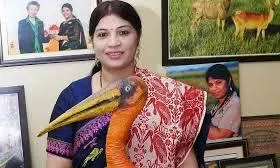

Indian environmentalist Purnima Devi Barman has earned a spot on Time magazine’s Women of the Year 2025 list, joining 12 other global honorees for her remarkable contributions to conservation.
She is the only Indian woman featured this year, recognised for her efforts in protecting the greater adjutant stork and empowering local communities in Assam.
Hailing from Kamrup, Assam, Purnima Devi Barman pursued a Master’s degree in Zoology, specialising in Ecology and Wildlife Biology at Gauhati University. Her journey into conservation took a defining turn in 2007 while conducting PhD research. She witnessed a local cutting down a tree that housed a greater adjutant stork nest, a species often despised for its appearance and scavenging nature. This incident prompted her to pause her PhD and dedicate herself to educating communities about the ecological significance of the species.
Barman’s commitment led to the establishment of the "Hargila Army", a women-led grassroots movement focused on protecting the stork’s nesting sites, rescuing injured birds, and fostering positive perceptions about the species. Over the years, her conservation network has expanded to nearly 10,000 women, who actively engage in wildlife preservation while gaining economic empowerment.
In addition to her grassroots initiatives, she has held key conservation roles, including senior wildlife diologist at Aaranyak, leading the greater adjutant conservation project; director of WiNN (Women in Nature Network) India; and member of the IUCN Stork, Ibis, and Spoonbill Specialist Group.
Her unique approach to conservation includes celebrating the birth of stork hatchlings with "baby showers", transforming perceptions of the species from an unwanted scavenger to a cherished bird.
Under Barman’s leadership, the greater adjutant stork has seen a significant population recovery, leading to its reclassification from endangered to near-threatened by the International Union for Conservation of Nature (IUCN). Her work also extends to economic empowerment, providing women with weaving looms and yarn to create and sell textiles featuring stork motifs.
Barman has received multiple accolades for her conservation work, including Nari Shakti Puraskar (2017) – India’s highest civilian award for women, presented by former President Ram Nath Kovind; Whitley Award (2017) known as the "Green Oscar," awarded by Anne, Princess Royal of the UK; and a feature in National Geographic India, highlighting her impact on wildlife conservation.