













Places of Worship Act does not protect temple built illegally on government land: Madras HC
text_fields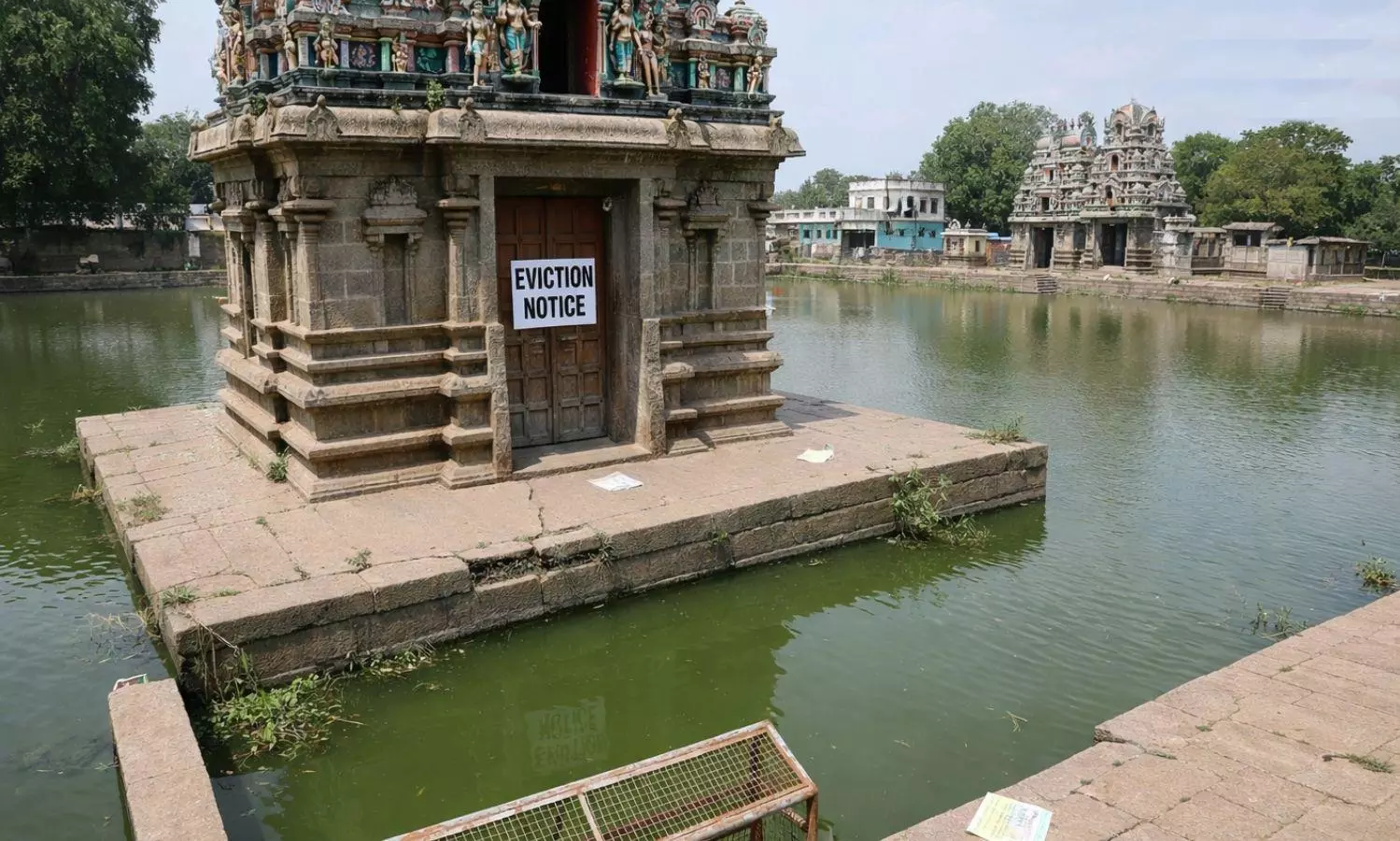

The Madras High Court, while rejecting a plea by the trustee of Sri Arulmighu Raajakaliamman Temple against an eviction order, observed that the Places of Worship Act, 1991, did not support a religious structure built on government land and would treat it as an encroachment, and further held that it could not be regularised under the government order, as the order was inapplicable to non-residential structures.
A Division Bench comprising Justices G Jayachandran and K K Ramakrishnan dismissed the petition filed by a man claiming to be the managing trustee of the temple situated in Ramanathapuram, and held that neither the intention of the legislation nor any provision under the Places of Worship (Special Provisions) Act, 1991, afforded protection to a structure put up by encroaching upon government land, according to The Indian Express.
The Bench remarked that the petitioner’s reliance on the Act was misconceived and appeared intended to mislead, as the statute did not extend protection to unauthorised constructions raised on public property.
The court further observed that the temple, being a non-residential structure, did not fall within the scope of a government order issued to regularise residential encroachments on unobjectionable government land, and it added that any attempt to secure a patta for land classified as a water body or pathway could not be sustained in law.
It held that a patta granted over land forming part of a water body or obstructing a public pathway was liable to be ignored, since no authority was empowered to legitimise such occupation.
According to the records placed before the court, the temple had been constructed on the bund of a water body classified as “Orruni Poramboke Road”, which was used by the public as a pathway.
The Commissioner of Ramanathapuram Municipality had initially issued a notice dated November 29, 2025, under the Tamil Nadu Local Bodies Act, 1998, directing removal of the encroachment within seven days, and subsequent notices were issued on December 30, 2025, and January 27, 2026, the latter being described as a third and final notice.
The petitioner contended that the temple had existed from time immemorial and that he had been maintaining it at his own expense since 1991, and he argued that the structure was assessed for tax and had been provided electricity service under his administration.
He also claimed that the eviction proceedings violated principles of natural justice and infringed Article 300-A of the Constitution, as well as other constitutional protections, and he pointed out that his request for grant of patta remained pending before the authorities.
The State, however, maintained that the temple had been constructed without permission on objectionable government land forming part of a water body and public pathway, and it submitted that tax assessment or electricity connection did not confer any legal right to seek regularisation.
It further argued that the government order relied upon by the petitioner applied only to residential encroachments on unobjectionable land, and that invoking both the regularisation order and the Places of Worship Act was inherently contradictory.
On considering the rival submissions, the High Court dismissed the plea on February 6, 2026, thereby upholding the eviction proceedings initiated by the municipal authorities.