













NFHS-6 drops key health indicators, raising questions over public accountability
text_fields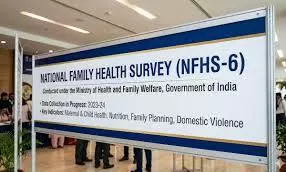

India's latest National Family Health Survey (NFHS-6) has sparked concern among public health experts after dropping 43 indicators that were included in previous rounds, including measures on anaemia, child mortality, sex ratio at birth, sanitation, clean cooking fuel access, cancer screening, and HIV awareness.
Released last week, the survey continues to track several government programme inputs but omits a number of outcome indicators that researchers have traditionally used to assess public health progress.
Among the most notable omissions are all seven anaemia-related indicators.
NFHS-5 had reported that nearly 67% of children under five and 57% of women aged 15-49 were anaemic, figures that raised questions about the effectiveness of the government's Anaemia Mukt Bharat programme. NFHS-6 still tracks iron-folic acid consumption among pregnant women, but no longer reports whether anaemia prevalence has changed.
The survey has also removed the sex ratio at birth, household access to improved sanitation, and access to clean cooking fuel. These indicators were closely linked to government initiatives such as the Swachh Bharat Mission and Pradhan Mantri Ujjwala Yojana.
Three major child survival indicators have also been dropped: neonatal mortality rate, infant mortality rate, and under-five mortality rate. While mortality data is available through other sources, experts note that NFHS uniquely allowed analysis across regions and social groups.
Indicators measuring screening for cervical, breast, and oral cancers have disappeared, as have four measures related to HIV/AIDS awareness and prevention.
The changes come after a prolonged controversy over NFHS-5 findings on anaemia. The Union Health Ministry had questioned the survey's methodology, while the International Institute for Population Sciences director K.S. James defended the results.
NFHS-6 introduces 13 new indicators, including population aged 60 and above, household bank account ownership, female ownership of land or housing, antenatal care coverage, and hepatitis-B vaccination.
Despite the reduced indicator set, the survey reports rising levels of obesity, diabetes, and hypertension. Nearly 31% of women and 27.3% of men aged 15 and above are now classified as obese, while millions more are affected by high blood sugar and elevated blood pressure.
At the same time, around one in five Indian adults remains underweight, underscoring the country's continuing challenge of tackling both undernutrition and lifestyle-related diseases. Public health experts say the removal of long-standing indicators could make it harder to evaluate whether government interventions are improving health outcomes and reducing inequalities.