














Muslim women’s group moves SC against plea for uniform divorce rules
text_fields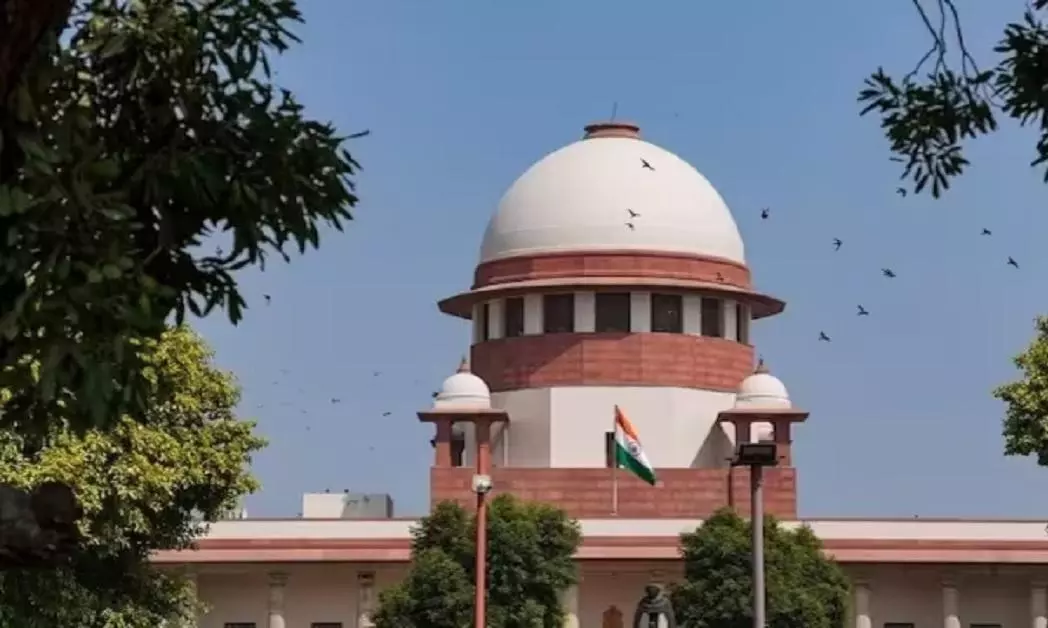

New Delhi: A Muslim women’s organisation has moved the Supreme Court seeking to be impleaded in a pending Public Interest Litigation that challenges Talaq-e-Hasan and other forms of unilateral and extra-judicial talaq, as well as the validity of the Shariat Application Act, 1937 and the Dissolution of Muslim Marriages Act, 1939. The PIL also calls for gender-neutral, religion-neutral, uniform grounds and procedures for divorce.
In its intervention application, filed by the Sharia Committee for Women through advocate-on-record Ejaz Maqbool, the organisation has argued that it is a necessary party because its work focuses on studying Muslim Personal Law and conducting grassroots awareness programmes for Muslim women on their rights under the Shariat Act. It has contended that allowing the petition would deprive Muslim women of their constitutionally protected rights to seek dissolution of marriage through Khula, Mubaraat and the statutory grounds under Section 2 of the 1939 Act.
The applicants submitted that Muslim Personal Law is a sacred framework rooted in the Qur’an, Ahadith, Ijma and Qiyas, and has been judicially recognised in Shayara Bano v Union of India as protected under Articles 14, 19(1), 25, 26 and 29 of the Constitution. They maintained that divorce in Islam is a matter of conscience and an integral religious practice, and any interference would amount to a violation of the fundamental right to freedom of conscience and religion.
The application stressed that Talaq-e-Hasan provides a reconciliation period during iddat, while Khula and Mubaraat give women avenues to seek separation without prolonged litigation. These mechanisms, it argued, help prevent “limping marriages” in which a civil divorce exists but a religious divorce does not, leaving Muslim women unable to remarry within their community. The group claimed that the petition reflects a misunderstanding of Muslim women’s agency and undermines systems that allow swift, inexpensive resolution of marital disputes without overburdening courts. It further asserted that Muslim women’s rights to religiously recognised divorce cannot be negated in the name of uniformity, particularly when Muslim Personal Law has been held to fall outside the scope of Article 13 and therefore cannot be tested against Articles 14, 15 or 21.
Alleging that the petitioner has already availed multiple legal remedies and is now using personal grievances to attack the entire framework of Islamic matrimonial law, the applicants have urged the Supreme Court to dismiss the PIL. The intervention comes against the backdrop of observations made by the apex court on November 19, when a counsel for one of the petitioners drew attention to the case of a woman who allegedly received an 11-page talaq notice signed not by her husband but by his advocate.
Justice Kant had then sharply criticised the practice, saying it raised serious concerns about dignity and women’s rights. He questioned why a husband could not directly communicate with his wife, asking whether “a civilised society” should permit such a method and noting that many women would lack the means to challenge such divorces and could later face accusations of polyandry if they remarried without a clear record of divorce.
While hearing the PIL, the Supreme Court had previously observed that the use of Talaq-e-Hasan by Muslims for divorce was not prima facie improper and cautioned that the matter should not be used to further any agenda. Talaq-e-Hasan is a form of divorce whereby a Muslim man pronounces “talaq” once a month over three months.
The petition in question has been filed by journalist Benazeer Heena through advocate Ashwini Upadhyay. It argues that Muslim men, but not Muslim women, can resort to Talaq-e-Hasan and other forms of unilateral extra-judicial talaq, and seeks court directions to frame gender-neutral, religion-neutral uniform grounds and a uniform procedure for divorce. The plea states that it has been moved in the interest of socially and economically marginalised citizens.