














MSU’s new Sociology courses include RSS, Hinduism & patriotism
text_fields
Photo: Express

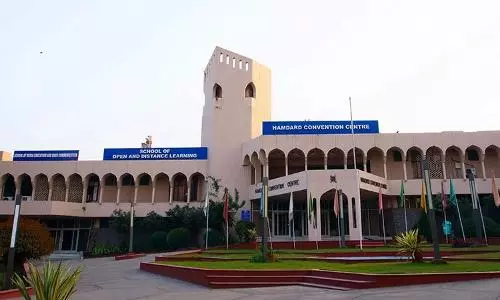
Maharaja Sayajirao University of Baroda has introduced a revamped sociology curriculum that includes modules on “Modi Tattva,” RSS fieldwork, and Indian knowledge systems, aiming to integrate themes such as indigenous traditions, Hindu studies, and nationalism into academic study.
The new courses—Sociology of Bharat, Hindu Sociology, and Sociology of Patriotism—will be offered as four-credit papers in the fourth year of the BA Sociology programme and the first year of the MA Sociology course from the upcoming academic session in June. The university indicated that the restructuring is intended to align sociological education with India’s civilisational knowledge, present-day governance, and lived social realities, Indian Express reported.
The curriculum has been conceptualised by Sociology Department head Virendra Singh, who also serves as chairperson of the Board of Studies and is associated with policy-related initiatives including NITI Aayog projects. He suggested that the initiative seeks to promote a practice-oriented and inquiry-driven approach to sociology that balances historical context with contemporary relevance.
As part of the Sociology of Patriotism course, the “Modi Tattva” module is designed to examine the leadership of Prime Minister Narendra Modi through the lens of sociologist Max Weber’s concept of charismatic authority. Singh indicated that the module treats Modi as a contemporary case study in leadership, public perception, and mass connection, arguing that his influence in current political discourse makes him a subject worth studying in the present rather than retrospectively.
The syllabus also incorporates the Rashtriya Swayamsevak Sangh as a fieldwork-based case study. Singh explained that this inclusion was inspired by student observations in rural Gujarat, where the organisation’s grassroots presence was noted. He suggested that the course would examine the RSS not merely as an ideological entity but as a model of social mobilisation, outreach, and network-building, highlighting its internal principles of accommodating differences without fostering division.
Additionally, the curriculum will feature a module on Sayajirao Gaekwad III, focusing on his contributions to social reform and governance. Singh noted that beyond establishing the university, Gaekwad had introduced progressive measures such as compulsory education for girls and penalties for non-compliance, which he described as a form of constructive policy intervention.
The course is also expected to include figures such as B. R. Ambedkar and Chhatrapati Shivaji Maharaj, with an emphasis on themes like social reform, leadership, and internal unity in the face of external challenges.
Under the broader Bharatiya Knowledge System framework, the Sociology of Bharat module will explore traditional Indian knowledge in fields such as medicine, technology, and social organisation.