















‘Let rupee depreciate’: Finance Commission chairman tells RBI
text_fields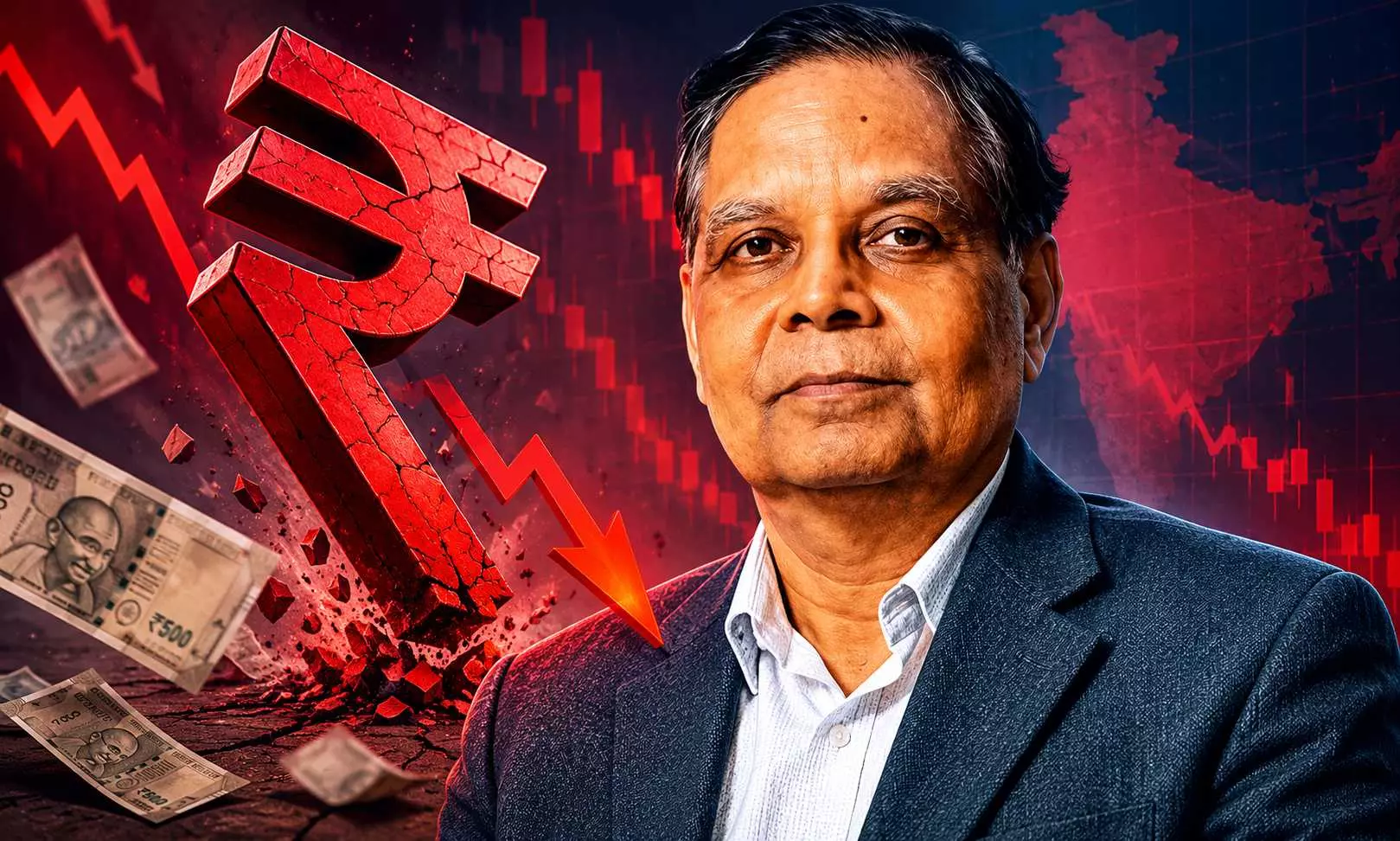
Representational.

New Delhi: Sixteenth Finance Commission chairman Arvind Panagariya said that the Reserve Bank of India should not allow concerns over the symbolic ₹100-per-dollar mark to dictate exchange-rate policy, warning that attempts to artificially defend the rupee could prove costly and ultimately ineffective, The Hindu reported.
“Dear @RBI: Do not let the psychology of Rs 100 per dollar determine your policy response. 100 is just a number, like 99 and 101. Whether the oil shortage is short-lived or long-lived, the right response at this moment is to let the rupee depreciate,” wrote on X.
His remarks come as the rupee approached ₹97 against the US dollar during intraday trading, with market participants indicating that the RBI intervened to prevent a further slide. Panagariya maintained that if the current pressure on the currency is driven by a temporary oil shortage, the rupee may weaken in the short term but is likely to recover significantly once oil import costs ease and foreign investors are attracted by the more competitive exchange rate.
However, if elevated oil prices and supply constraints persist for more than a year, he believes currency depreciation would be unavoidable. In such a scenario, efforts to support the rupee through foreign-exchange reserves would merely deplete those reserves without addressing the underlying imbalance.
Panagariya also expressed scepticism about alternative measures reportedly under consideration, such as issuing dollar-denominated bonds or offering high-interest dollar deposits to non-resident Indians. He argued that these instruments would impose substantial costs because they require higher interest payments than the returns India earns on its foreign-currency reserves, while largely benefiting wealthier overseas investors.
He further noted that India’s economic conditions are stronger than during the 2013 currency crisis, when inflation was in double digits. According to him, prudent monetary management by the RBI has kept inflation under control, leaving the economy better positioned to absorb the inflationary impact of a weaker rupee if depreciation becomes necessary.