














India rejects China’s objections to naming 28 strategic locations in Ladakh
text_fields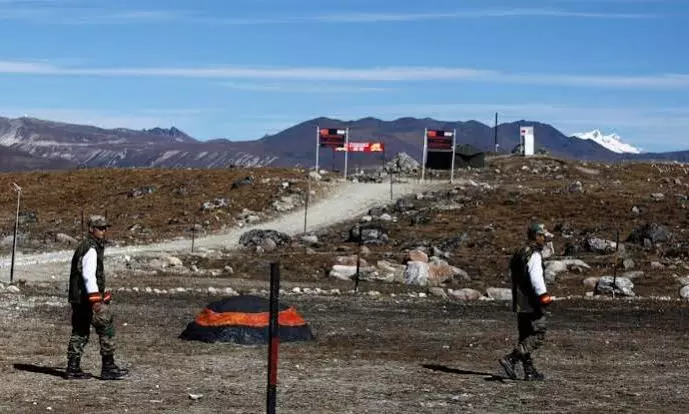

India on Tuesday reiterated that Ladakh is an “integral and inalienable part of India” after China objected to New Delhi’s decision to standardise the names of 28 geographical features and strategic locations in the Union Territory.
India formally identified the locations on October 2 for official mapping, including Gogra and Hot Spring, which were among the friction points during the 2020 military standoff between Indian and Chinese troops.
The Ministry of External Affairs said the move was intended to improve the accurate identification of the locations and raise public awareness of the sensitive border region.
“Identifying these places formally on the Survey of India map of UT of Ladakh is aimed at facilitating their accurate recognition and better awareness among the public at large,” the ministry said.
“It is reiterated that the UT of Ladakh is an integral and inalienable part of India. No amount of denial by the Chinese side can change this established fact,” it added.
The locations include mountain peaks, glaciers, passes and valleys, among them Zorawar Peak, Karun Pir mountain, Skamri Glacier and Shachmirik Pass.
China opposed the move, with Foreign Ministry spokesperson Mao Ning calling it illegal and invalid, according to The Global Times. Beijing said it did not recognise the Union Territory of Ladakh and maintained that the disputed areas in the western sector of the China-India boundary belonged to China.
India and China dispute sections of their roughly 3,500-km border along the Line of Actual Control (LAC).
In June 2020, clashes in Galwan Valley in eastern Ladakh killed 20 Indian and four Chinese soldiers, marking the deadliest confrontation between the two countries in decades. The two sides subsequently held multiple rounds of military talks and disengaged troops from several friction points.