















India, China must cooperate against US tariffs, says Chinese ambassador
text_fields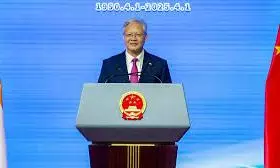

China strongly opposes the Trump administration’s decision to impose 50% tariffs on India, calling it “unfair and unreasonable.”
Chinese Ambassador Xu Feihong said on Monday that India and China should expand cooperation in economic and trade areas to jointly counter this challenge.
The ambassador’s remarks came during an event marking the 80th anniversary of China’s victory over Japan.
Responding to questions after his speech, Xu said that the US is using tariffs as a “weapon” to extract “exorbitant” costs from various countries.
He stated that the trade war was initiated by the US and emphasized that international trade should be complementary and foster mutually beneficial cooperation. While the US had long gained from free trade, it was now using tariffs as a weapon or tool. He further remarked that imposing tariffs of up to 50% on India was unfair and unreasonable, and that China strongly opposed it. Xu also urged both countries to seek ways to address this “threat.”
Xu highlighted that both countries have “2.8 billion people, we have mega-size economies, mega-size markets and we have hard working people. Our economies are complementary.” He also welcomed more Indian companies to invest in China while urging India to ensure a “fair, just, and non-discriminatory business environment for Chinese enterprises.”
He recalled remarks made by Chinese President Xi Jinping and Indian Prime Minister Narendra Modi during their August 31 meeting at the SCO summit.
Xu stated that Xi emphasized how China and India, as the two largest and most important emerging economies, are at a unique stage of development and should prioritize mutual support, complementarity, and shared success. He added that PM Modi remarked that cooperation between the two nations would help make the 21st century truly an Asian century, with both leaders highlighting the significance of economic collaboration between their countries.
Xu emphasised that the relationship between the two nations is not affected by any third party. “Important consensus was reached between India and China on the boundary issues and that bilateral relationship between the two sides has not been impacted by a third party,” he said, indirectly referencing Pakistan.
The ambassador also stated that both countries are “victims of terrorism” and should work together to counter the threat.
He stated that China and India share common interests in counter-terrorism and have maintained communication through multilateral platforms like the SCO, BRICS, and the Tianjin Declaration, where member states condemned terrorism in all its forms. He added that China firmly opposes all types of terrorism and is prepared to collaborate with the international community, including India, to promote the implementation of the global security initiative.
Efforts are ongoing to ensure regional and global peace and stability, he added.
Xu also noted the strong people-to-people relations between the two countries. “The foundation of the people-to-people friendship between the two countries is solid. Since the beginning of this year, Chinese diplomatic missions in India have issued over 240,000 visas to Indian citizens,” he said.
He encouraged both countries to commit resources toward national development, stating that China is ready to enhance the alignment of development strategies and share its modernization experience with India. He also expressed China’s openness to more Indian companies promoting their products and investing in China, while hoping that India would offer a fair, just, and non-discriminatory business environment for Chinese enterprises.
Ambassador Xu concluded that India and China should “provide mutual support, promote mutual growth, and help each other to succeed,” marking this as a crucial phase in their respective development journeys.