


















India builds first rock check dam across Indus in Ladakh
text_fields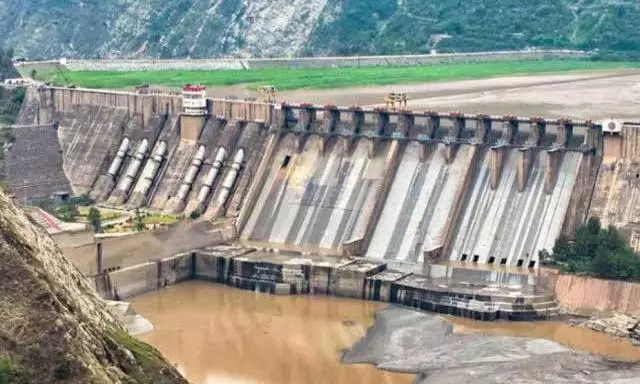

India has built its first rock check dam across the Indus River at Upshi in Leh, in a project aimed at easing water scarcity in Ladakh’s farming communities and increasing the use of river water in border areas.
Built entirely with natural boulders without cement, the dam has raised the water level by nearly 10 feet. It stores nearly 40 million litres of water and supplies the Igoo Phey irrigation canal, allowing farmers to irrigate fields that had faced severe water shortages during the spring sowing season.
For years, farmers in the region struggled to draw water from the Indus because the river flowed at a low level through deep gorges, making it difficult for pumps to access the water. Water scarcity, along with limitations on the use of Indus water, had affected agricultural activity and strained the farming community financially.
The project also carries strategic significance as India seeks to expand water infrastructure in areas close to its border with Pakistan. With India having placed the Indus Waters Treaty in abeyance, the check dam demonstrates a greater focus on using Indus water to support communities and agriculture in the region.
The Ladakh administration is planning additional check dams along the Indus, with work already underway at some locations. It has submitted a proposal to the Union Ministry of Jal Shakti for 36 check dam projects across the Union Territory at an estimated cost of more than Rs 56 crore.
The proposal includes seven Himalayan Rock Check Dams in the Leh region and 29 reinforced cement concrete check dams or weirs in the Kargil region. The projects are aimed at strengthening water security and expanding irrigation potential across Ladakh.