















Hindu, Muslim parties reject SC mediation in Gyanvapi, Mathura, Sambhal cases
text_fields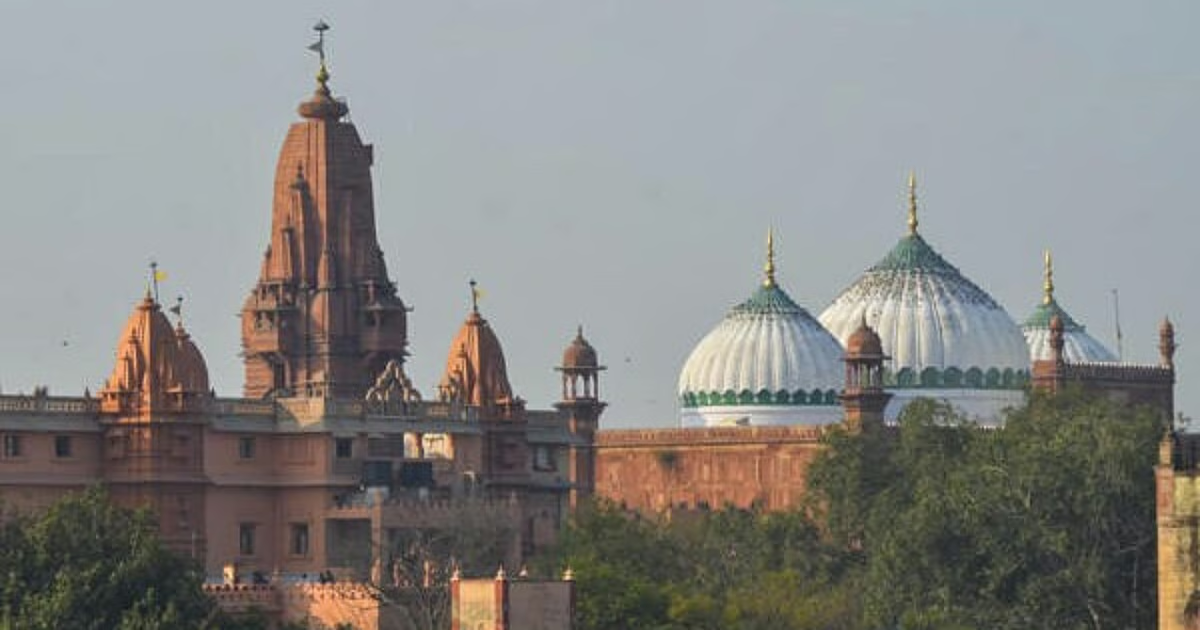

Hindu and Muslim parties have declined the Supreme Court's proposal for mediation in the disputes relating to the Gyanvapi mosque in Varanasi, the Shahi Idgah mosque in Mathura and the Shahi Jama Masjid in Sambhal, opting instead to continue pursuing the cases in court.
The Supreme Court had sought the consent of all parties to resolve the three disputes through mediation under the 2026 Supreme Court Action for Mediated Adjudication and Disputes Harmonization Across Nation (Samadhan Samaroh). The initiative began in April and is scheduled to conclude with a Special Lok Adalat in August.
In the Gyanvapi case, the Hindu side has claimed that an oval-shaped object discovered on the mosque premises in May 2022 is a shivling, a representation of Lord Shiva. The mosque's management committee, however, has maintained that the object is a defunct fountainhead located in the wazu khana (ablution tank).
In January 2024, a Varanasi court permitted Hindus to offer prayers in the sealed basement of the Gyanvapi complex after an Archaeological Survey of India (ASI) report stated that a Hindu temple had existed at the site before being destroyed in the 17th century and replaced by the mosque.
In the Shahi Idgah dispute, the plaintiffs have claimed that the mosque was constructed at the birthplace of Lord Krishna after demolishing a temple at the site.
The Sambhal mosque dispute stems from a petition alleging that the Shahi Jama Masjid was built in 1526 by Mughal ruler Babar on the site of the centuries-old Shri Hari Har Temple dedicated to Lord Kalki.
In November 2024, a civil court in Sambhal ordered a survey of the mosque. Violence broke out when officials returned to conduct a second survey, leaving five people dead.