












Delhi Uni to conduct exams on Eid day; Student moves High Court
text_fields

New Delhi: A law student from the University of Delhi has approached the Delhi High Court challenging the university’s decision to conduct examinations on May 28, the day officially declared by the Union government as the Eid al-Adha holiday. The petition argued that the move violated the constitutional rights of Muslim students under Articles 14, 21, 25 and 29, calling the university’s stand arbitrary and discriminatory, a report by Maktoob Media said.
The plea pointed out that several constitutional institutions and public authorities, including the Supreme Court of India, had already shifted the Eid holiday to May 28 in accordance with the Centre’s declaration. Despite this, Delhi University reportedly chose to continue with scheduled examinations on the same day.
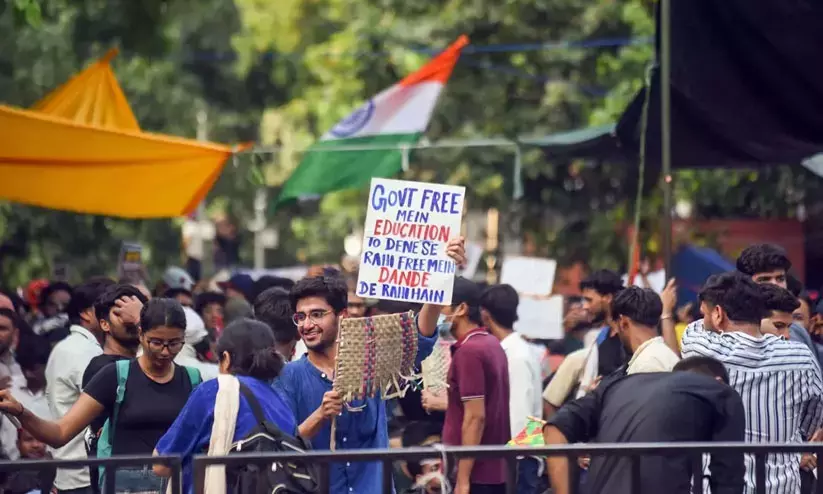
The controversy triggered protests from students and campus organisations, which accused the university administration of forcing Muslim students into an impossible choice between their examinations and their right to observe a major religious festival. Ahammed Rabeeh PR, president of the Fraternity Movement Delhi University, stated in a letter to the Vice Chancellor, Registrar and Controller of Examinations that the administration had ignored repeated warnings and placed Muslim students in an untenable situation affecting both their academic future and religious freedom.
Following mounting protests, the university issued a circular declaring May 28 as an Eid holiday. However, student groups condemned the decision as contradictory because the administration simultaneously announced that examinations scheduled for the day would proceed without changes.
The Students' Islamic Organisation of India, Delhi University unit strongly criticised the move, arguing that it disregarded the concerns and religious observances of thousands of students. All India Students' Association also demanded immediate rescheduling of the examinations and accused the university of undermining secular and inclusive values expected from a public institution.