







Delhi HC rejects PIL to remove graves of Maqbool Bhat, Afzal Guru from Tihar Jail
text_fields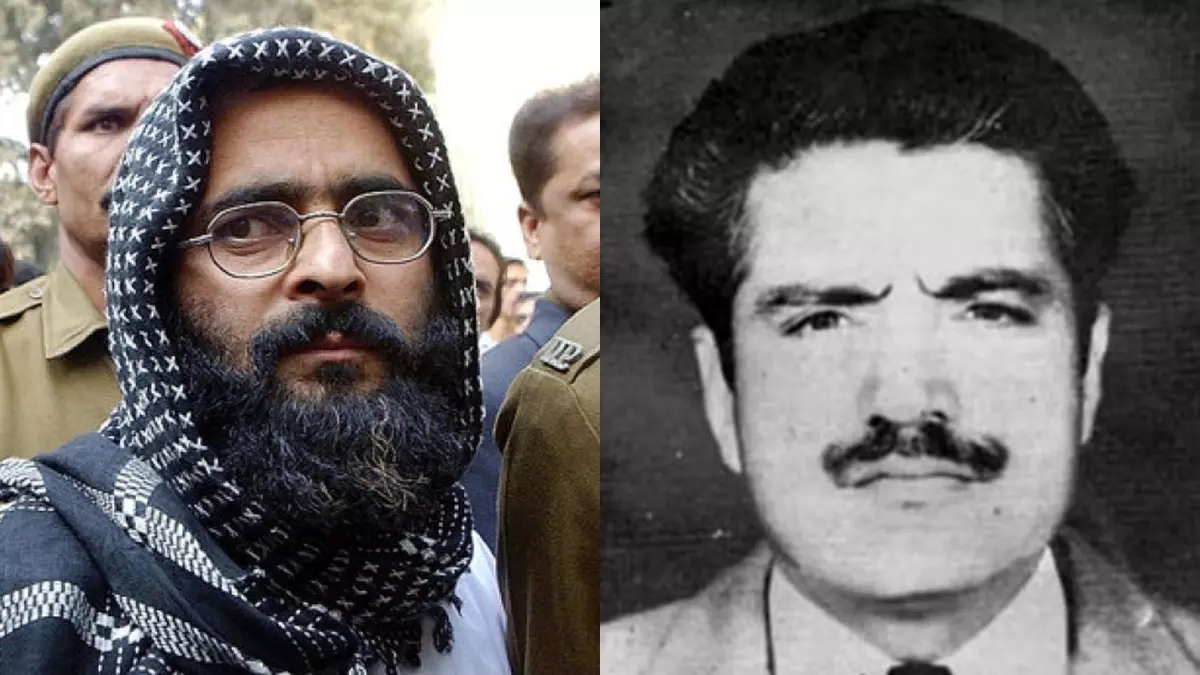

New Delhi: The Delhi High Court on Wednesday rejected a PIL seeking the removal of the graves of Mohammad Maqbool Bhat and Mohammad Afzal Guru, Kashmiris executed for terrorism-related offences, from Tihar Central Jail, while ordering that their remains be relocated to a secret location to prevent “glorification of terrorism.”
The plea, filed by the Hindu right-wing organisation Vishwa Vedic Sanatan Sangh, claimed that the construction and continued presence of the graves inside Tihar Central Jail was “illegal, unconstitutional, and against public interest.” It argued that the graves had turned the jail into a site of “radical pilgrimage,” where “extremist elements gather to venerate convicted terrorists.”
When counsel argued that the graves were a “nuisance” under Section 398 of the Delhi Municipal Corporation Act due to people committing crimes to pay homage, the court asked, “What kind of nuisance are you talking about? Understand the word nuisance. It may be a cause of concern, but that cannot be equated with the nuisance the authority is concerned with under Section 398. Jail is not a public place. Jail is a place owned by the State, established for a specific purpose. Where is the question of any grave causing an offence?”
A division bench comprising Chief Justice DK Upadhyaya and Justice Tushar Rao Gedela asked the petitioner to withdraw the plea with liberty to file afresh. The court observed that any kind of glorification must not be permitted, stating, “It (burial) was performed in the year 2013. We are in 2025. You are calling it a nuisance. Prima facie it may be anything, but a nuisance within the meaning of the Act… These are sensitive issues from both angles. Somebody’s last rites need to be respected, and that is why provisions in Prison Rules say it has to be done with solemnity. We need to ensure that no law and order situation arises. Keeping in view all these aspects, the government took the decision. Can we challenge the decision now after 12 years? We need to have data. The petition and prayer should be to direct the jail authorities to take steps so that no glorification takes place.”
Accordingly, the petitioner agreed to withdraw the plea and file a fresh one focused on preventing glorification. During the hearing, the court also questioned the petitioner’s interpretation of the prison rules. The Chief Justice remarked, “The emphasis of the rule was that if a body has to be transported outside the prison, it has to be done with all solemnity. It doesn’t say that each body has to be taken outside the prison.”
The petitioner cited the burials of Ajmal Kasab and Yakub Memon, arguing they were conducted in a manner preventing glorification. “…Neither the Prison Act, 1894, nor the Rules provide for the burial of a terrorist or a convict inside the jail premises. However, it is a matter of record that two terrorists, who were awarded the death sentence in Tihar Central Jail, Delhi, were buried within its premises,” said the counsel. The plea also claimed that the graves “pose a serious risk of contagious and dangerous diseases to both inmates and employees of Tihar Jail.”
Afzal Guru was sentenced to death in December 2002 after being convicted of conspiracy to attack the Indian Parliament, waging war against India, and murder in December 2001. He was tried by a special court under the Prevention of Terrorism Act (POTA), which was later repealed in 2004 following allegations of abuse. A group of activists and lawyers including Nandita Haksar and Arundhati Roy campaigned for Guru, arguing that his trial was marred by serious problems, including fabricated evidence presented by the police and lack of proper legal representation.
The Indira Gandhi government executed Kashmiri separatist Maqbool Bhat on February 11, 1984, just five days after the killing of Indian diplomat Ravindra Mhatre in the UK by a JKLF affiliate, which fueled widespread anger in Kashmir. Bhat had been sentenced to death in 1966 for murdering a CID official, escaped to Pakistan in 1968, and was recaptured by Indian forces in 1976, with the Supreme Court upholding his sentence in 1978.