















SC to hear Dalit Christians’ plea against caste discrimination in Trichy church
text_fields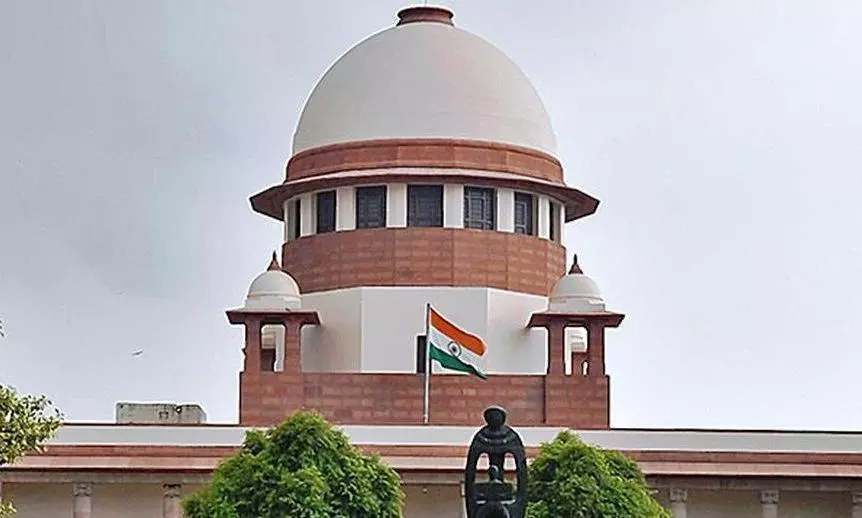

The Supreme Court of India has agreed to examine a petition filed by Dalit Christians from Tamil Nadu’s Trichy district, who have alleged caste-based discrimination within the Roman Catholic Church administration in Kottapalayam Parish.
The petition challenges the exclusion of Dalits from church festivities and the segregation of burial grounds, calling the practice a violation of fundamental rights.
On February 21, a Supreme Court bench comprising Justices PS Narasimha and Manoj Misra issued notices to the Tamil Nadu government and church authorities, seeking their responses by April 15.
The petitioners, who are residents of Kottapalayam village, claim that despite converting to Christianity, they continue to face caste-based discrimination both within the church and in the broader community. Reports from Trichy’s Kottapalayam and Ayyampatti villages indicate that Dalit Christians experience social exclusion from dominant caste Christians and Hindus alike.
Efforts to challenge this discrimination have been met with strong resistance. In one instance, a priest advocating for caste equality was expelled from the village by members of dominant caste communities.
Appearing on behalf of the petitioners, Advocate Franklin Caesar Thomas argued that caste-based bias is evident in daily life. The plea states: "As of today, Dalit Catholic Christians in the village continue to suffer from traditional untouchability and inhuman caste-based discrimination due to the dominance of the upper caste Christian community."
According to the petitioners, they have made multiple appeals to district and state authorities, but no action has been taken. Previously, in April 2024, the Madras High Court dismissed their petition, directing them to seek relief through civil courts and the National Commission for Minorities (NCM).
However, the petitioners challenged this ruling, arguing that the NCM lacks the authority to enforce constitutional rights. They insist that caste discrimination within church administration is not a private dispute, but a serious constitutional issue that requires intervention from the judiciary.
The petitioners claim they are excluded from church decision-making processes, barred from participating in annual church festivals, and denied equal access to burial grounds. Unlike non-Dalit Catholics, they allege they are not allowed to bring their deceased into the church for funeral prayers.
They assert that these practices violate their fundamental rights under the Indian Constitution, including: Article 14 – right to equality before the law; Article 15 – prohibition of discrimination based on caste, religion, or race; Article 17 – abolition of untouchability; Article 19 – freedom of expression; Article 21 – right to life and dignity; and Article 25 – Freedom of religion.
The petition urges the Supreme Court to intervene, emphasising that caste-based discrimination within church administration must be recognised and addressed as a constitutional issue rather than an internal religious matter.