















Balochistan conflict traces back to Pakistan's independence amid unresolved grievances: report
text_fields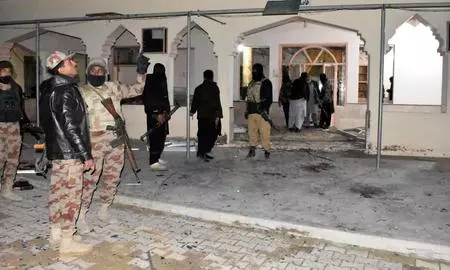

Kabul: Recent attacks in Balochistan underscore not just security woes but deep-rooted political failures to redress provincial grievances, with the violence's origins dating to Pakistan's independence, according to a Khaama Press report.
The piece highlights documented human rights issues, like enforced disappearances and extrajudicial killings, that criminalize dissent and fuel armed resistance, per activists.
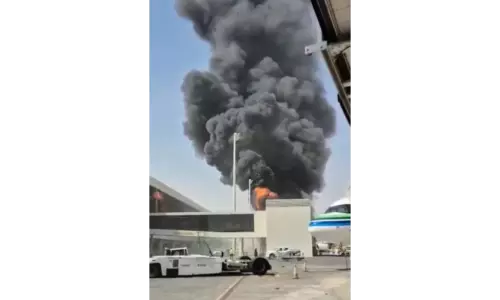
On January 31, the Baloch Liberation Army (BLA) unleashed 'Operation Herof 2.0,' striking 12 districts including Quetta, Gwadar, and Mastung via gun assaults, suicide bombings, and brief takeovers of police stations and facilities. Officials reported 17 police and 31 civilians killed; forces claimed 145 insurgents downed, a figure BLA disputes.
Intensified security sweeps have raised alarms over local treatment, the report notes. "The recent violence in Balochistan represents not an isolated incident but a dramatic escalation in a conflict with roots stretching back to Pakistan’s independence. Understanding the crisis requires examining historical grievances, documented human rights violations, economic disparities, and what critics describe as political failures," an opinion piece states.
Balochistan spans 44% of Pakistan's land but just 6% of its population. Yet it's the poorest province: About 70% in multidimensional poverty, 33% unemployment, despite Sui gas (35-40% of national supply), copper, gold, and coal riches.
CPEC projects, notably Gwadar port, stoke resentment over displacement, job exclusion, and sidelined locals in decisions on ancestral lands.
Grimmest are enforced disappearances and killings. Baloch Yakjehti Committee (BYC) logged 1,223 cases in 2025; Human Rights Council of Balochistan tallied 1,455 (1,443 men, 12 women)—1,052 still missing, 317 freed, 83 custody deaths, 3 jailed by year-end.
BYC's 2025 report cited 188 extrajudicial killings, 75 via "kill and dump," worst in Makran and Awaran. Pakistan maintains about 736 permanent and 300 temporary checkpoints, which critics say breeds "occupation" vibes over integration.
Insurgency now includes female suicide bombers, carrying symbolic heft in patriarchal Baloch society. Critics decry absent political engagement.
"Pakistan often brands autonomy or fair resource demands as separatism, tagging dissent anti-state. The federally backed provincial government falters on grievances. Security trumps dialogue, pushing urban youth to arms. Military fixes can't solve political roots: marginalization, exploitation, rights woes," the article concludes.
(Inputs from IANS)