
















Char Dham temples propose ban on non-Hindu entry, citing sanctity of shrines
text_fields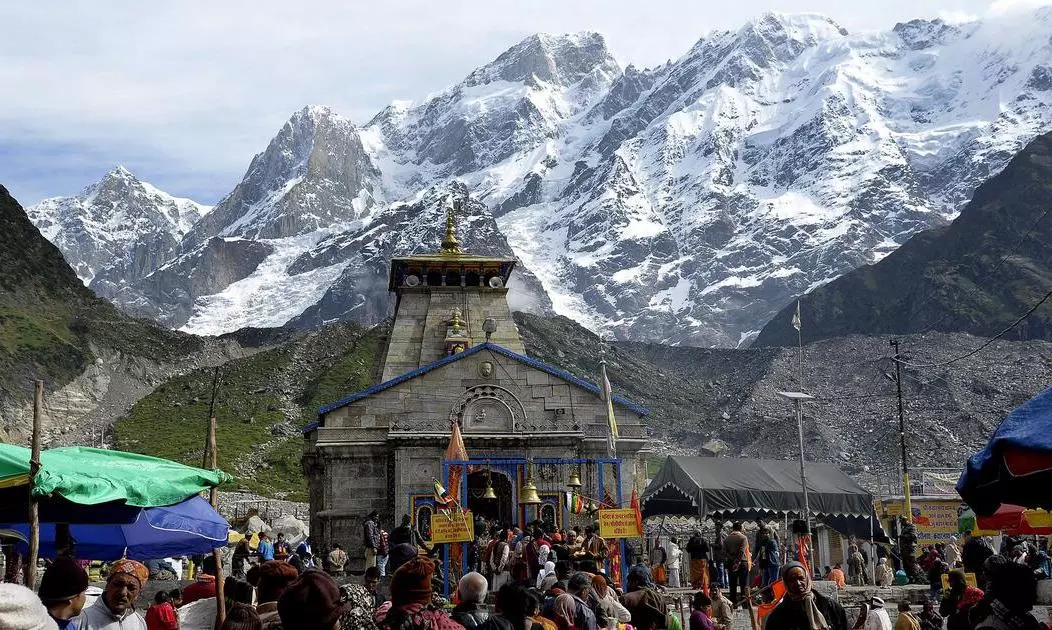

Dehradun: Following a similar move at Haridwar's Har-ki-Pauri ghat, temple committees managing the revered Char Dham shrines in Uttarakhand have proposed barring "non-Hindus" from entering the religious sites. The proposal, which covers Badrinath, Kedarnath, Gangotri, and Yamunotri, has sparked a political debate, with the state government signaling openness to the idea while opposition leaders decry it as a tactic for communal polarization.
The initiative gained momentum on Monday when Suresh Semwal, chairperson of the Shri Gangotri Temple Committee, announced a unanimous decision to restrict access. "Non-Hindus will also not be allowed to enter Mukhba, the winter abode of the goddess," Semwal stated following a committee meeting.
Hemant Dwivedi, chairperson of the Badrinath-Kedarnath Temple Committee (BKTC), supported the move, stating that a formal resolution would be discussed next month with the aim of implementing the ban in time for this year's Char Dham Yatra. "The Char Dham shrines are not tourist spots and those who have no faith in Sanatan Dharma must not enter our sacred places," Dwivedi said, questioning the motives of visitors who do not believe in Hindu deities. He indicated plans to consult with the administration and Chief Minister Pushkar Singh Dhami.
However, not all stakeholders are aligned. An unnamed office-bearer of the BKTC told The Indian Express that the chairperson's statement was made without broader consultation. The member highlighted practical challenges, noting that the local economy relies heavily on non-Hindu traders and laborers. "Most of these groups are non-Hindus; how can we ask them to leave?" the member asked, pointing out that government officers and dignitaries are often accompanied by non-Hindu staff. The member clarified that Sikhs, Jains, and Buddhists would likely be exempt, suggesting the restriction is aimed specifically at "non-Sanatanis."
Chief Minister Pushkar Singh Dhami responded to the developments by affirming the autonomy of the temple committees. "These religious sites are our ancient places of worship and those who run and manage these shrines…will have their opinions and views on the management of the shrines," Dhami said. He added that the state government is reviewing existing laws regarding historical religious sites and "will proceed based on that."
The opposition Congress party has strongly criticized the proposal. Former Chief Minister Harish Rawat accused the BJP of resorting to communal polarization, arguing that such prohibitions contradict the inclusive nature of Hinduism. "Those who would earlier gatekeep their religious places have started opening them to all, while Hinduism, which is known for being open to all, is closing its doors," Rawat observed.
Congress leader Suryakant Dhasmana echoed these sentiments, calling the move a diversionary tactic to distract from real issues. He also raised constitutional questions regarding access to public spaces, asking, "International tourists visit these places. How will you bar these people?"
This proposal follows the January 16 installation of hoardings by the Ganga Sabha at Har-ki-Pauri in Haridwar, which explicitly prohibited the entry of non-Hindus, setting a precedent for the current controversy.