











Centre rejects engine complaint concerns, says E20 is cleaner than pure petrol
text_fields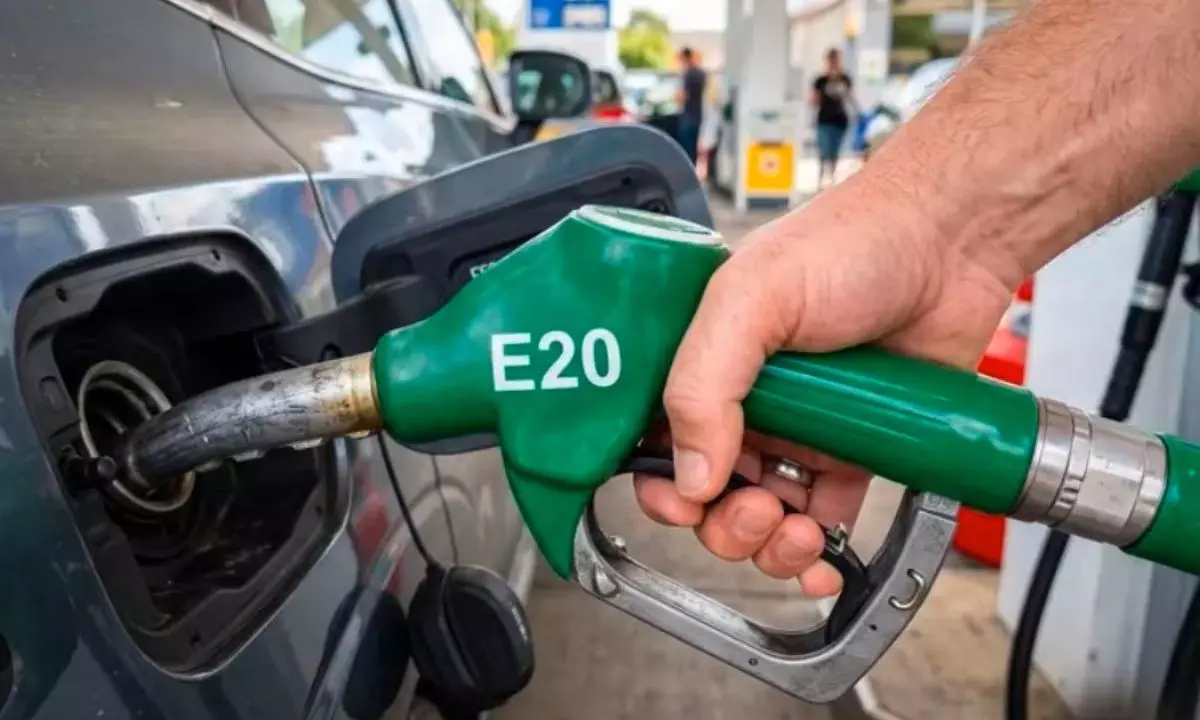

Amid consumers’ outcry over mileage concerns, alleged engine complaints arising from the use of ethanol-blended petrol, and the absence of an option to purchase pure petrol instead of blended fuel as available in several foreign countries, the Petroleum Ministry has mounted a robust defence of E20 petrol, describing it as a cleaner, faster and less-polluting fuel while maintaining that offering multiple grades of petrol across the country would pose formidable logistical challenges.
Issuing a detailed set of frequently asked questions on Friday, the ministry asserted that maintaining separate stocks of pure petrol, E10 and E20 at more than one lakh fuel retail outlets would significantly increase handling costs, complicate inventory management and undermine operational efficiency across India's extensive network of refineries, depots, terminals and pipelines.
India achieved its target of 20 per cent ethanol blending in petrol last year, making E20—comprising 80 per cent petrol and 20 per cent ethanol—the standard petrol grade nationwide. The transition, however, has sparked criticism from motorists, particularly owners of older vehicles, who claim the higher ethanol content has resulted in reduced fuel efficiency and accelerated wear and tear of engine components.
The ministry dismissed such apprehensions, contending that any reduction in mileage in older vehicles would be limited to between three and five per cent and would be more than offset by the fuel's higher-octane rating, superior anti-knock characteristics, cleaner combustion, smoother acceleration and improved engine performance. It further rejected assertions that E20 damages engines or fuel system components.
Defending the nationwide adoption of E20, the ministry noted that the programme was neither rushed nor based on assumptions. Rather, it followed extensive consultations with automobile manufacturers, component suppliers, research institutions and testing agencies, alongside comprehensive trials assessing engine durability, corrosion resistance, drivability, emissions and material compatibility. The roadmap for E20 implementation, it pointed out, had been publicly available since 2021.
The ministry also highlighted that public sector banks had financed nearly ₹1 lakh crore annually towards ethanol production and allied infrastructure. Reverting to lower ethanol blends, it argued, would jeopardise substantial investments made by farmers, cooperatives, entrepreneurs, financial institutions and public sector enterprises under the national ethanol policy.
Citing industry data, the ministry said Maruti Suzuki serviced 2.84 crore vehicles during the 2025-26 financial year, including 1.5 crore older, non-E20-compliant vehicles, without reporting E20-related corrosion, abnormal wear or reduced component life. Similar field experience had been reported by Hero MotoCorp. Had E20 caused widespread damage, it argued, the country would have witnessed lakhs of warranty claims and extensive component failures, which had not occurred.
The ministry further emphasised that ethanol and blended petrol conform to stringent Bureau of Indian Standards specifications and undergo rigorous quality checks throughout the supply chain. While indications suggest the proposed transition to E25 petrol may be deferred in view of public concerns, the ministry urged consumers not to be swayed by misinformation circulating on social media, reiterating that E20 is a scientifically validated, safe and environmentally beneficial fuel.