















SC/ST Act irrelevant if caste slurs are made privately: Supreme Court
text_fields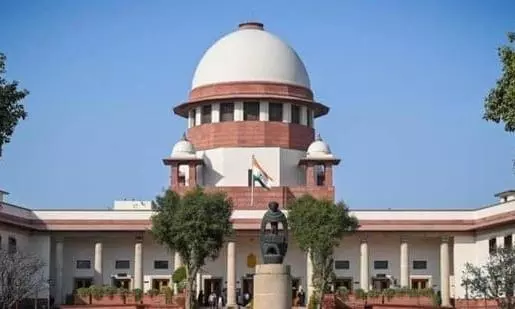

New Delhi: The Supreme Court of India has ruled that casteist remarks made in a private setting do not amount to an offence under the Scheduled Castes and Scheduled Tribes (Prevention of Atrocities) Act, clarifying that the law applies only when such acts occur in a place “within public view.” A bench comprising Justices Vikram Nath and Sandeep Mehta issued the judgment while quashing proceedings under the SC/ST Act against a school manager, setting aside an earlier order by the Allahabad High Court which had refused to dismiss the charges.
The case stems from a January 2020 incident where a complainant visited a school to address an altercation involving his son. According to the FIR, the school manager and staff members allegedly assaulted the complainant with lathis and hurled casteist abuses at him inside an enclosed office room. The manager subsequently challenged the SC/ST Act proceedings, arguing that the alleged remarks took place inside a room without windows or public access, and that no witnesses were present inside the room to hear the statement.
The Supreme Court reiterated that for an offence under Sections 3(1)(r) and 3(1)(s) of the SC/ST Act to stand, members of the public must be in a position to see or hear the alleged remarks. The bench observed that if an alleged offence takes place within the four corners of a wall where members of the public are not present, it cannot be said to have taken place within public view.
The court further noted that the FIR failed to attribute specific casteist slurs to the school manager, and witness statements from teachers only referred to a general altercation without confirming that anyone heard caste-based insults inside the room. The bench held that the mere presence of people elsewhere on the school campus does not meet the legal threshold of an act being committed within public view. While the Supreme Court quashed the charges under the SC/ST Act, it clarified that trial proceedings relating to other alleged offences, including assault and wrongful confinement, will continue.