
















Can’t prosecute one for skipping stanzas of Vande Mataram: SC
text_fields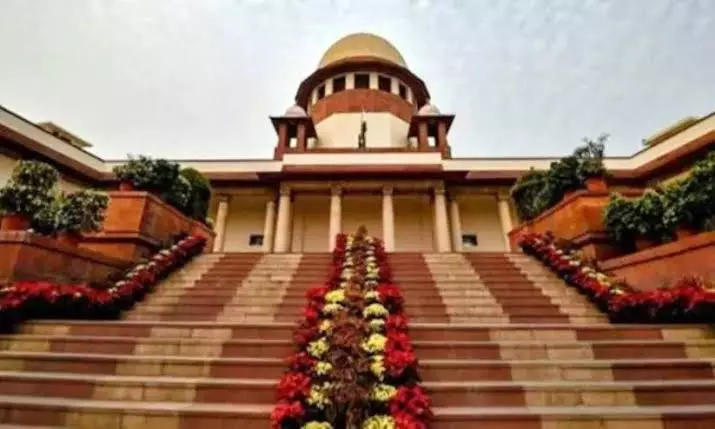

New Delhi: The Supreme Court on Tuesday sought the Union government's response to a challenge against the 2026 amendment to the Prevention of Insults to National Honour Act, which introduces criminal penalties for obstructing the singing of ‘Vande Mataram’, Bar and Bench reported.
A Bench comprising Chief Justice of India Surya Kant and Justices Joymalya Bagchi and V. Mohana directed the Centre to respond within two weeks to a petition filed by Carnatic vocalist T.M. Krishna.
The amended law provides for imprisonment of up to three years, a fine, or both for deliberately preventing the singing of the National Anthem or National Song, or disrupting an assembly engaged in singing them.
During the hearing, Justice Bagchi referred to the Supreme Court’s 1986 ruling in Bijoe Emmanuel, which protected students who respectfully declined to sing the National Anthem on grounds of conscience and religion. The judge indicated that the precedent remains applicable and that a conscientious objector should not face criminal prosecution merely for refusing to sing some or all stanzas of ‘Vande Mataram’.
Krishna’s petition challenges Section 3 of the 1971 Act, as amended in 2026, as well as the Ministry of Home Affairs' directions requiring the complete six-stanza version of ‘Vande Mataram’ to be performed at specified official, ceremonial, and cultural events.
The singer contends that the directions go beyond regulating official protocol and effectively compel citizens to participate in the song’s final four stanzas. His plea cites references to Hindu deities,, including Durga, Lakshmi, and Saraswati, in those stanzas, arguing that compulsory participation raises questions about secularism and freedom of conscience.
The petition invokes constitutional guarantees under Articles 14, 15(1), 19(1)(a), 21 and 25(1).