


Amendment to make insulting ‘Vande Mataram’ a punishable offence cleared by Cabinet
text_fields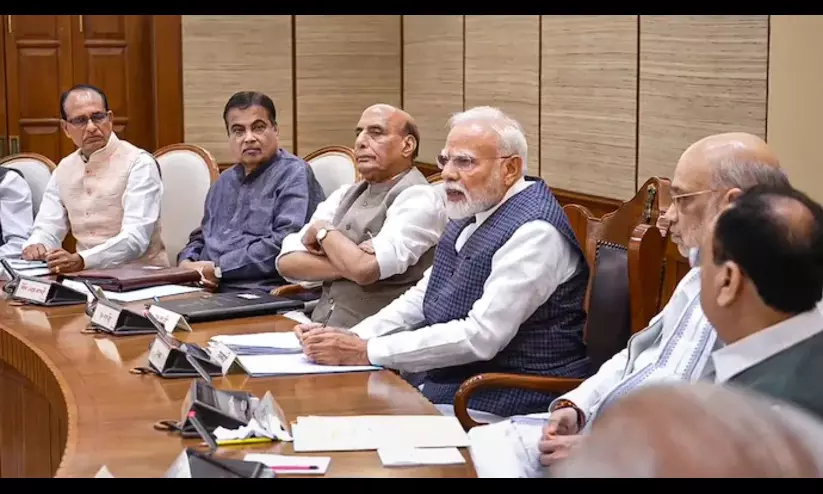
Photo: Maktoob

The Union Cabinet on Tuesday approved an amendment to the Prevention of Insults to National Honour Act, 1971 to make insulting or obstructing the singing of the national song Vande Mataram a punishable offence.
At present, the 1971 law provides penalties for insulting the national anthem Jana Gana Mana, the national flag and the Constitution, with punishment extending to three years’ imprisonment, a fine, or both.
According to reports by several media organisations, including The Hindu and The Times of India, the Cabinet meeting chaired by Prime Minister Narendra Modi approved a proposal to amend Section 3 of the Act to include Vande Mataram among protected national symbols. The amendment would reportedly make insulting the national song or disrupting its singing a cognisable offence, Maktoob Media reported.
Section 3 of the Act currently states that anyone who “intentionally prevents the singing of the Indian National Anthem or causes disturbance to any assembly engaged in such singing shall be punished with imprisonment for a term which may extend to three years, or with fine, or with both.”
Earlier, on January 28, Union Home Minister Amit Shah directed that all six stanzas of Vande Mataram should be sung first whenever it is performed along with Jana Gana Mana.
Previously, only the first two stanzas of the national song were used at official events, while the remaining portions invoking Hindu goddesses such as Durga, Lakshmi and Saraswati were omitted.
In October 1937, the Congress Working Committee adopted only the first two stanzas of Vande Mataram as the national song. The Bharatiya Janata Party has long alleged that the remaining four stanzas were excluded by the Congress to appease Muslims.
Criticism surrounding Vande Mataram has historically focused on its Hindu religious imagery and concerns over compelling people to sing it. Several Muslim organisations and scholars have objected to parts of the song that depict the nation as Hindu goddesses, arguing that such references conflict with Islamic monotheistic beliefs.
Critics have also expressed concern that criminalising dissent or refusal to participate in singing the song could raise questions about freedom of expression and religious freedom guaranteed under the Constitution.