











After 7 years of legal limbo, SC to hear female genital mutilation case
text_fields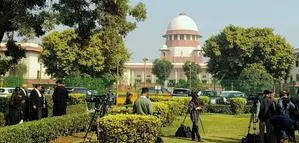

After more than seven years of delay, the Supreme Court of India is set to hear a key Public Interest Litigation (PIL) challenging female genital mutilation (FGM), with a nine-judge Constitution Bench scheduled to begin proceedings on April 7.
The petition, filed in 2017 by lawyer Sunita Tiwari, is considered one of the most significant legal challenges to the practice, locally known as khatna or khafz, within the Dawoodi Bohra community. It seeks a declaration that FGM is unconstitutional, calls for specific legislation banning the practice, and urges authorities to prosecute offenders under existing criminal laws.
The case has been grouped with other matters involving broader constitutional questions on religious freedom, including women’s entry into the Sabarimala Temple, Muslim women’s access to mosques, and the rights of Parsi women married outside their community to enter fire temples.
Together, these cases raise critical questions about the interpretation of Articles 25 and 26 of the Constitution and the extent of judicial intervention in religious practices, The News Minute reported.
Activists have maintained that the issue should not be viewed through the lens of religious freedom but rather as one of bodily autonomy and gender-based violence, arguing that FGM amounts to a violation of fundamental rights.
Advocate Maya Nirula reportedly argued that FGM is a sociocultural practice rather than a religious one and that no claim of religious freedom can justify infringing upon a girl’s bodily integrity.
When the PIL was initially filed, the anti-FGM movement in India was still at an early stage, with only a few survivors speaking publicly. Over time, however, the litigation became a focal point for both activists and survivors.
Acknowledging the importance of the case, Masooma Ranalvi, a survivor and founder of WeSpeakOut, filed an intervention petition to ensure that survivor perspectives were represented in court.
She indicated that the organisation, then in its early phase and still building support, lacked the resources to approach the judiciary independently. However, once the Supreme Court took up the matter, they felt compelled to participate, believing it was necessary to represent those directly affected and ensure their voices were heard.