











Daddio: on daddy issues and sharing vulnerabilities
text_fields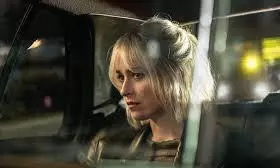

“It’s nice you’re not on your phone. To see a human not plugged in. It says a lot about you.” Thus begins the long conversation – and the movie itself – between the quick-witted cab driver and the confused young woman passenger in Daddio. In a wholly wired (and weird) world, where AI tools are more trusted than humans, a beautiful connection is a deep longing for everyone. Well, when was the last time you had a meaningful, trusted conversation with a stranger? Or even with a friend or family member? Inevitably, to converse is to know; and to know is to trust. Or vice versa.
Two strangers being open enough to build a conversation in a night cab ride, sharing vulnerabilities, and exploring the pertinent questions on relationships – that’s what Daddio is in a nutshell. A New York cab carries a young woman, Girlie (Dakota Johnson), from JFK Airport to Manhattan, as she returns home. The talkative driver, Clark (Sean Penn), engages her in a witty conversation about anything and everything: the night is ordinary, the drive is banal, nothing dramatic or eventful happens, except for the stories they share and the trust they gradually develop.
Beyond the ride, or rather through the drive, Daddio talks about the daddy issues of modern civilization. As the ride progresses, we learn that Girlie is in an intimate relationship with an older, married man. Clark, having been there before, warns her that what these middle-aged men want is just another toy to play with. His word of advice is not to utter the word ‘love’ ever. But the sad and inevitable fact was that she was already in love with him. On the other hand, we see this invisible lover messaging her to send nude pictures to ease his arousal. From the explicit sexting and the graphic nudity he conveys through messages, apparently, what he seeks is nothing short of carnal pleasure. Besides, he is a happy family man! At a certain point, Girlie hesitantly asks him if he was bothered when she said she loved him. “I was surprised,” he replies.
We are later informed that Girlie calls him daddy. Her childhood was devoid of fatherly affection or even a protective presence: the sensitive dynamics of the Electra complex come into play. She had always been a kid who wanted to hear beautiful bedtime stories. But now, as Clark observes, she wants a different kind of bedtime story, which she gets in abundance, and in the process, pays a price by finding herself pregnant. Girlie’s relationship with her half-sister had also been marked with violence and estrangement. The idea of a family, or a sense of belonging, a soil to be rooted, is what this young heart misses, poignantly.
When a young woman goes to an older man, a “sugar daddy” so to speak, what does she look for, beyond material comforts? Safety, sex, belonging, love, affection or something bigger than all of this? Is love or sex that leaves one at peace, eventually and generally? How does our need for belonging function? What role does power play? Daddio brings these questions to the surface; indeed, a happy watching, though it could leave you bothered, by refusing to end with clichéd resolutions.
Sean Penn and Dakota Johnson give remarkable performances, although all they have to do is sit and talk, and talk. That too, most of the time, even without direct eye contact, as their gazes meet mostly on the cab’s rearview mirror. Dakota, with her confused curiosity, giggling joy, and unresolved wounds, is a joy to look at, especially as she retains a pain-stained smile on her face. For Sean Penn, his eloquent eyes in the rearview mirror, seen in the background of endless fading neon lights on the highways, are enough to convey his authentic wise old man archetype. As Dakota – who liked the script enough to produce the movie – says in an interview, this movie can inspire people to open up their vulnerabilities, as long as it is safe, with other human beings. Debutant director Christy Hall makes an affectionate affirmation through this movie: meaningful connections between unknown people are a gift of humanity, they are always possible, and they can occur without any particular intent or planned longevity.