












India–US trade pact: India to cut or remove tariffs on US goods as US retains 18% levy
text_fields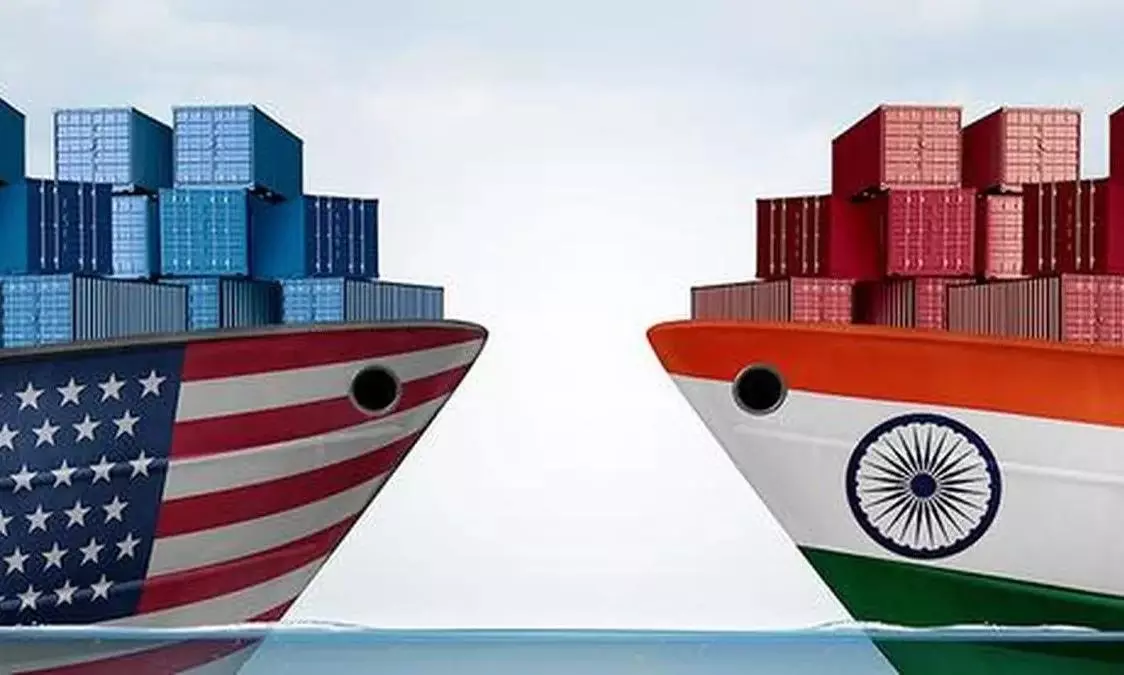

A framework for the India–US trade agreement has reportedly been finalised between the two countries, under which US tariffs on Indian imports will be reduced to 18 per cent and India will reduce or remove tariffs on all American industrial goods as an interim plan, the success of which is likely to see zero tariffs on several goods, including generic pharmaceuticals, gems and diamonds, and aircraft parts.
According to a joint statement issued on Saturday, February 7, the interim framework outlines reciprocal market access commitments, under which India has agreed to lower duties on a broad range of US agricultural and food products, including dried distillers’ grains, red sorghum for animal feed, tree nuts, fresh and processed fruits, soybean oil, as well as wine and spirits, thereby signalling a significant shift in India’s traditionally protectionist tariff regime.
The statement further indicated that, once the interim arrangement is successfully concluded and converted into a legal agreement, tariffs on several high-value goods would be reduced to zero, a move that is expected to enhance India’s export competitiveness, strengthen supply chains, and support the government’s Make in India initiative, particularly in sectors linked to manufacturing, aviation and pharmaceuticals.
Both sides stated that they would move swiftly to implement the framework and work towards finalising the interim agreement, while keeping in view the broader objective of concluding a comprehensive bilateral trade agreement in accordance with an agreed roadmap that has been under discussion for nearly a year.
However, the announcement of the trade framework coincided with fresh scrutiny from Washington over India’s energy imports, after US President Donald Trump issued an executive order on February 6 stating that India had committed to halting direct or indirect imports of Russian crude oil, and that a US-led monitoring structure would be established to ensure compliance, a provision that has raised concerns in New Delhi over sovereignty and policy autonomy.
The executive order also recalled that the US had imposed punitive tariffs of 25 per cent on all Indian goods in August 2025, following India’s continued purchase of discounted Russian crude, a measure that had strained bilateral trade relations and added urgency to ongoing negotiations.
Earlier, Union Commerce Minister Piyush Goyal had clarified that a formal agreement was still under negotiation and was expected to be signed by mid-March, while Commerce Secretary Rajesh Agrawal noted that India could lower tariffs only after the joint framework is converted into a legally binding agreement, given that India operates under a most-favoured-nation tariff regime rather than executive levies.
Goyal has described the interim deal as the first tranche of a larger India–US free trade agreement and has suggested that proposed purchases of American goods worth $500 billion could be spread over five years, citing India’s growing needs in energy, data centres, information and communication technology, and aviation, with aircraft and related components alone accounting for an estimated $100 billion in potential orders.
The framework announcement follows Trump’s recent assertion that India would move towards reducing both tariff and non-tariff barriers on US goods to zero, an assertion that New Delhi appears keen to contextualise within a phased and legally grounded trade process.