












West Asia on edge again: Iran, Israel trade deadly strikes; tension on
text_fields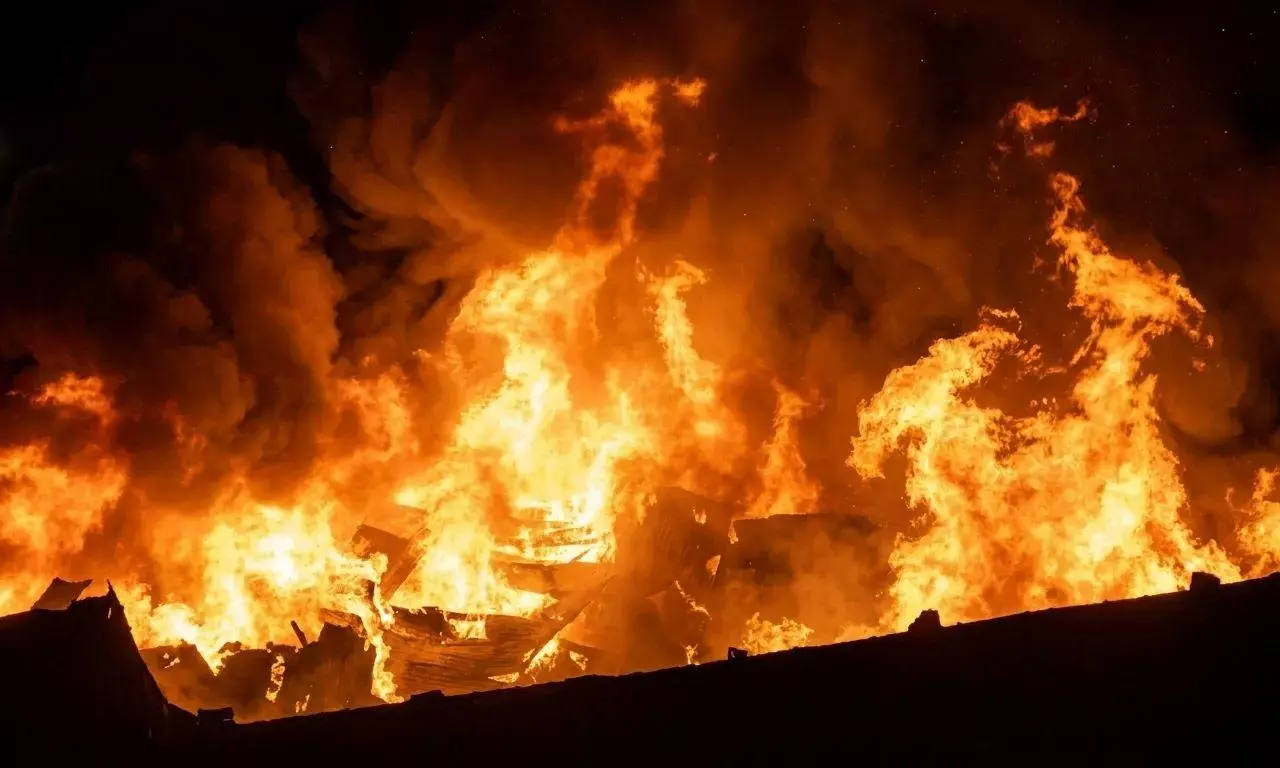
Representational.

Tehran: West Asia has been thrust back into a state of high tension after Iran and Israel exchanged fresh missile and air strikes, shattering hopes that a fragile ceasefire declared in April would hold.
Iran’s Islamic Revolutionary Guard Corps (IRGC) claimed responsibility for missile attacks on Israel and said it had also targeted a petrochemical facility in Haifa in retaliation for what it described as a US-Israeli strike on an Iranian petrochemical plant. The IRGC warned that further attacks on Israel’s energy sector and civilian infrastructure could follow, raising fears of wider disruption to regional energy supplies and the global economy.
The latest escalation followed Iranian missile attacks on Israel, over Israel’s ceasefire violations in Lebanon, after which Israeli forces launched extensive strikes on Tehran, Isfahan and Tabriz using ballistic missiles and air power. Iran subsequently carried out another round of missile attacks on Israeli territory, intensifying concerns of a broader regional conflict.
As tensions mounted, Israel placed the country on high alert. Educational institutions were shut, hospitals were ordered to shift critical operations to protected underground facilities, and residents were advised to move to secure shelters. Iran, meanwhile, closed major airports including Imam Khomeini International Airport, Mehrabad International Airport and Kermanshah International Airport.
The renewed hostilities have complicated diplomatic efforts led by US President Donald Trump, who had reportedly urged Israeli Prime Minister Benjamin Netanyahu to avoid retaliatory action and preserve ongoing negotiations aimed at ending the confrontation. Despite those efforts, Israeli strikes proceeded, casting uncertainty over diplomatic initiatives involving Washington, Tehran, Lebanon and Israel.
Iran also warned the United States against intervening or assisting Israel, threatening attacks on American military installations across West Asia. In response to indications that US facilities could become targets, the American embassy in Jordan issued security advisories to its citizens.
The conflict has severely disrupted regional air traffic, with reports indicating temporary restrictions or closures affecting airspace in Iran, Iraq, Syria and Israel.
The escalation also rattled global energy markets. Brent crude rose by more than $3 to $96.24 per barrel, while US crude climbed to $93.41. Analysts linked the surge to fears over regional instability and uncertainty surrounding energy exports through the Strait of Hormuz, a critical route for global oil trade.
With missile exchanges continuing and diplomatic efforts under strain, concerns are growing that West Asia may be sliding back into a prolonged and dangerous confrontation.