









US Army to detonate 4,355 kg of volatile lead explosive in Iowa, raising fears of toxic fallout
text_fields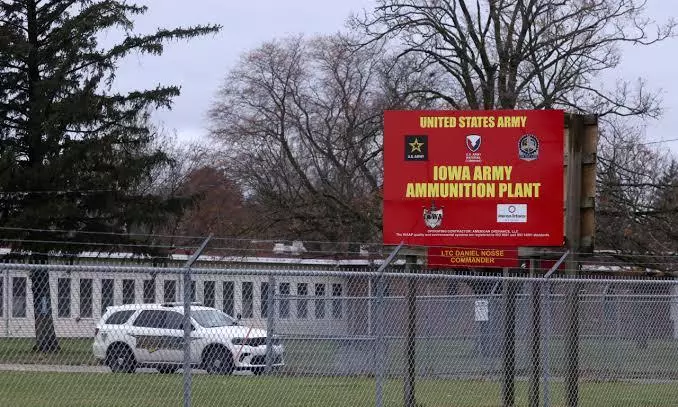

The US Army is preparing to detonate its entire stockpile of lead azide, a highly volatile explosive weighing around 4,355 kg, at an ammunition plant in Iowa on Wednesday.
The planned explosion has raised concerns over the spread of toxic lead dust across nearby homes and farmland.
The operation involves 68 barrels containing around 9,600 pounds of lead azide. A federal appeals court on Monday rejected an attempt by environmental groups to stop the detonation, lifting a temporary halt.
The Army has deployed personnel to Middletown and put several safety measures in place. These include a water wall containing more than 100,000 gallons of water, earth berms, sand-filled blocks and temperature-regulating tarps.
"Our foremost priority is public health and safety, so take a look at how we’re protecting the community," the Army said in a post on X.
Army Secretary Adam Telle defended the decision, saying, "A controlled, mitigated detonation of the lead azide here at Iowa Army Ammunition Plant is far preferable to an uncontrolled, spontaneous detonation of that substance."
Lead azide is used in military ammunition as a primer or detonator. It is highly sensitive to impact, friction, and sudden stimuli. Its lead content also poses serious health risks. Lead exposure can damage the brain, nervous system, and other organs. Children and pregnant women are particularly vulnerable.
The 68 barrels have been stored at the Iowa facility since 2009. Temperature fluctuations caused the material to partially dissolve and recrystallise, making it more sensitive to shock and friction. The Army has said conventional disposal methods could trigger an accidental explosion.
Residents of Middletown, a farming community of around 360 people, and nearby Burlington have expressed concern over possible contamination. Authorities have warned that some residents within five miles southwest of the facility could be evacuated.
The Federal Emergency Management Agency has advised people further away to remain indoors with their windows closed.
"Everybody’s thinking it’s going to be a mushroom cloud of lead coming toward them," farmer Brent Koller told The New York Times.