
















UNICEF calls on Taliban to end restrictions on girls' education
text_fields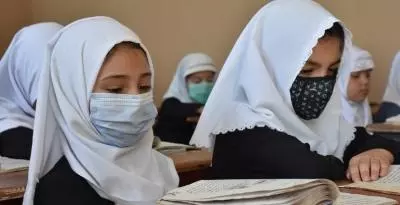

Kabul: The United Nations International Children's Emergency Fund (UNICEF) on Wednesday urged the Taliban to allow girls to pursue education at all levels, warning that restrictions on girls' education have confined them to their homes, where they are increasingly facing mental health issues, child marriage, and early pregnancies.
The agency urged Taliban to lift restrictions without delay and ensure that every girl gets access to education at all levels, from primary school to higher education, Afghanistan's leading news agency Khaama Press reported. Notably, the Taliban banned secondary education for girls in Afghanistan, shortly after they seized power in August 2021.
UNICEF Executive Director Catherine Russell voiced concerns over the deteriorating mental health challenges and increasing early marriages among Afghan girls banned from pursuing education for nearly four years.
In a statement on Wednesday, UNICEF stated that millions of girls have been impacted by restrictions imposed by the Taliban. It warned that over 2.2 million adolescent girls will be excluded from schooling by the end of 2025.
Russell stated that the return of two million Afghan refugees from Pakistan and Iran in 2025 has further increased the number of girls not going to school. She warned that restrictions have not only led to girls missing academic lessons but are also getting deprived of social interaction, personal growth, and opportunities to shape their future.
She said that Afghan girls were being deprived of their basic right to education. She stated, "While millions of children worldwide return to classrooms for the new academic year, Afghan girls are denied this basic right," terming it a defining injustices of our time.
UNICEF also expressed concern over the Taliban's exclusion of women from the workforce, saying that the restrictions threaten Afghanistan’s long-term stability and progress, as no nation can prosper when half its population is not allowed to contribute to national development and the workforce. The agency emphasised that the recent earthquake in Afghanistan demonstrates the critical need for trained female health and social workers in a segregated society.
On September 8, UN Mission in Afghanistan (UNAMA) head Roza Utunbayeva marked the International Literacy Day by calling for access to education, especially for Afghan women and girls, Khaama Press reported. Speaking in Kabul on September 8, Utunbayeva said books are a source of knowledge and a path to sustainable well-being, emphasising that equal access is important for Afghanistan’s future.
UNAMA warned that the Taliban's restrictions continue to bar girls from pursuing education in secondary schools and universities, a policy that now continues for the fourth year. The UN officials warned that restrictions on Afghan girls' education undermine both human rights and development, leaving Afghanistan further isolated and unprepared for modern-day realities.