












SpaceX Starship’s flight test 13 success; aims to land humans on Moon
text_fields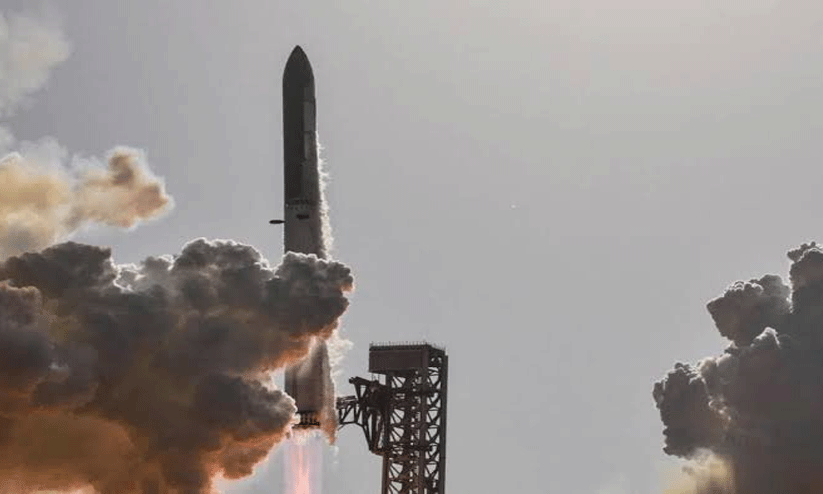

Washington: SpaceX has successfully completed the 13th test flight of its Starship rocket as the company moves closer to beginning regular operations by the end of this year. The giant rocket lifted off from SpaceX’s Starbase facility in Texas on Friday, deploying 20 upgraded Starlink internet satellites during a suborbital test flight.
Standing nearly 400 feet (122 metres) tall, the Starship system launched at around 5:51 pm Central Time from Starbase, Texas. The mission deployed 20 next-generation Starlink V3 satellites designed to provide higher bandwidth and faster internet speeds. The satellites briefly communicated with SpaceX’s existing Starlink network as part of the test before the spacecraft followed a planned suborbital trajectory and re-entered Earth’s atmosphere.
SpaceX livestreamed footage captured by cameras mounted on the spacecraft during its journey above the atmosphere. The broadcast showed stormy weather conditions and heavy rainfall below the flight path, with engineers at the company’s Hawthorne, California headquarters celebrating the successful progress.
The test involved a new version of Starship considered crucial to SpaceX’s future plans, including expanding Starlink satellite internet services, supporting NASA’s Artemis lunar missions and deploying thousands of artificial intelligence processing satellites in orbit.
After an approximately one-hour mission, Starship successfully completed a controlled re-entry and splashdown in the Indian Ocean. The heat shield showed significant improvement compared with previous tests, with no major damage reported. The achievement marked another step towards CEO Elon Musk’s vision of rockets operating like aircraft, with frequent launches and returns.
However, the Super Heavy first-stage booster failed to complete its planned controlled descent into the Gulf of Mexico. Around 10 minutes after launch, after reaching a speed of nearly 26,400 kmph, the booster lost control during its return attempt. SpaceX said issues with the restart of five engines caused the booster’s descent speed to increase, leading to its crash into the sea.
The failure followed a similar incident during the previous May test flight, when the booster also failed to complete its planned recovery. SpaceX aims to use Starship to deploy V3 Starlink satellites by the end of 2026, with the goal of providing direct satellite connectivity to ordinary mobile phones.