
















Iran conflict may outlast Trump presidency, former US official warns
text_fields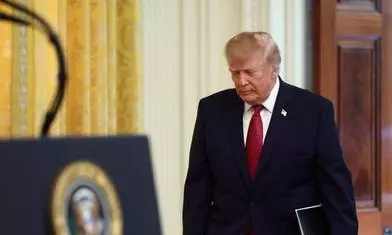

Washington: The conflict between the US and Iran could continue until the end of President Donald Trump’s term and leave his successor to deal with the fallout, former senior White House Middle East official Brett McGurk has warned.
McGurk, who served as President Joe Biden’s coordinator for the Middle East and North Africa, said there was no clear path towards a comprehensive settlement with Tehran. He predicted a prolonged period of economic pressure, intermittent military exchanges and possible temporary ceasefires.
“If I had to make a prediction, this is going to go on through the end of Trump’s presidency, and it’ll go into — the next president will have to deal with this chronic problem of Iran,” McGurk told CNN’s Fareed Zakaria.
He said the issue had confronted every US President since Jimmy Carter and described it as a “perennial problem”.
McGurk said the Middle East had witnessed a “fundamental” shift in the balance of power since Hamas’ October 7, 2023, attack on Israel. He referred to two subsequent military campaigns involving Iran, including Operation Midnight Hammer against Iranian nuclear infrastructure and the conflict that began on February 28.
He expressed concern that the latest conflict began with what he described as an open-ended objective of regime change.
“Once you go down that road, you can find yourself very much trapped in how you actually wind it down,” he said.
McGurk said he could not foresee an end to the conflict unless Iran’s political system fundamentally changed its character and policies or eventually collapsed, adding that such an outcome was “way down the road”.
He predicted that the confrontation would continue with “serious economic pressure”, occasional tit-for-tat military exchanges and possible interim ceasefire agreements.
A comprehensive nuclear agreement with Iran would be even more difficult, McGurk said, suggesting that Tehran viewed its status as a threshold nuclear state as its ultimate deterrent.
“Getting that deal on the nuclear side is going to be really hard,” he said.
McGurk’s assessment came as US Energy Secretary Chris Wright said the Trump administration was keeping both diplomatic and military options open.
Asked on CBS News’ “Face the Nation” about reports that the US was sending additional defensive equipment to Gulf nations to protect oil infrastructure and that a third carrier strike group was heading to the region, Wright said Washington was pursuing every possible avenue to prevent Iran from obtaining nuclear weapons.
“The President has taken a strong stand that Iran, the world’s greatest terrorist regime, cannot and will not have nuclear weapons,” Wright said.
He said the administration was applying economic pressure while preparing for possible military action, adding that the US could not leave the next administration to deal with a nuclear-armed Iran.
Wright declined to say whether Trump had decided to escalate the conflict after Election Day, when the third carrier strike group was expected to arrive.
He said Trump was “always planning for contingencies” and “always negotiating”, confirming that diplomatic and military pressure remained active simultaneously.
The conflict has also created an increasingly difficult energy challenge for the administration. Wright acknowledged that there could be no guarantee against further disruptions to oil infrastructure in the Gulf.
“There are no guarantees in conflict. There are no guarantees in life,” he said.
However, he predicted that petrol and diesel prices would fall in the coming weeks, citing increased supplies through the Strait of Hormuz, record US petrol production and declining demand after the summer driving season.
Wright said Trump had been aware that his decisions on Iran could push energy prices higher in the short term.
“He knew it was going to elevate energy prices in the short run. He said, ‘I’m going to take a hit there, but I’ve got to do the right thing,’” Wright said.
The domestic political impact of the conflict was also highlighted on US Sunday talk shows, with the midterm elections just a month away.
According to the latest US media polling, nine in 10 voters believed the conflict had made petrol and oil prices either “a lot” or “a little” higher.
Former New Jersey Governor Chris Christie said the war and rising prices were affecting Republican candidates. ABC News, meanwhile, cited a Quinnipiac poll showing that 28 per cent of registered voters approved of Trump’s handling of the conflict, while 66 per cent disapproved.
The political fallout has been particularly visible in military communities. In Virginia’s Second Congressional District, which includes Virginia Beach and is near the world’s largest naval base at Norfolk, Republican Representative Jen Kiggans and former Democratic Representative Elaine Luria, both Navy veterans, are contesting the seat.
Kiggans has strongly backed the military campaign, while Luria has criticised her rival’s support for the war.
Arizona Democratic Senator Mark Kelly also attacked the administration’s handling of the conflict, saying ending the war would help bring down prices.
Kelly, a former Navy pilot and astronaut, criticised Defence Secretary Pete Hegseth’s management of the war and alleged that the US had attacked more than 15,000 targets while depleting its munitions.
He accused the administration of entering another war “without a plan” and without explaining what the US hoped to achieve.
Republican Senator John Kennedy of Louisiana also acknowledged the conflict’s economic impact, saying inflation had resurfaced under Trump because of the war.
“Once we settle the war in Iran, those prices will come down,” Kennedy said.
(Inputs from IANS)