
















Hamas, Israel move towards phase two of US-backed Gaza plan
text_fields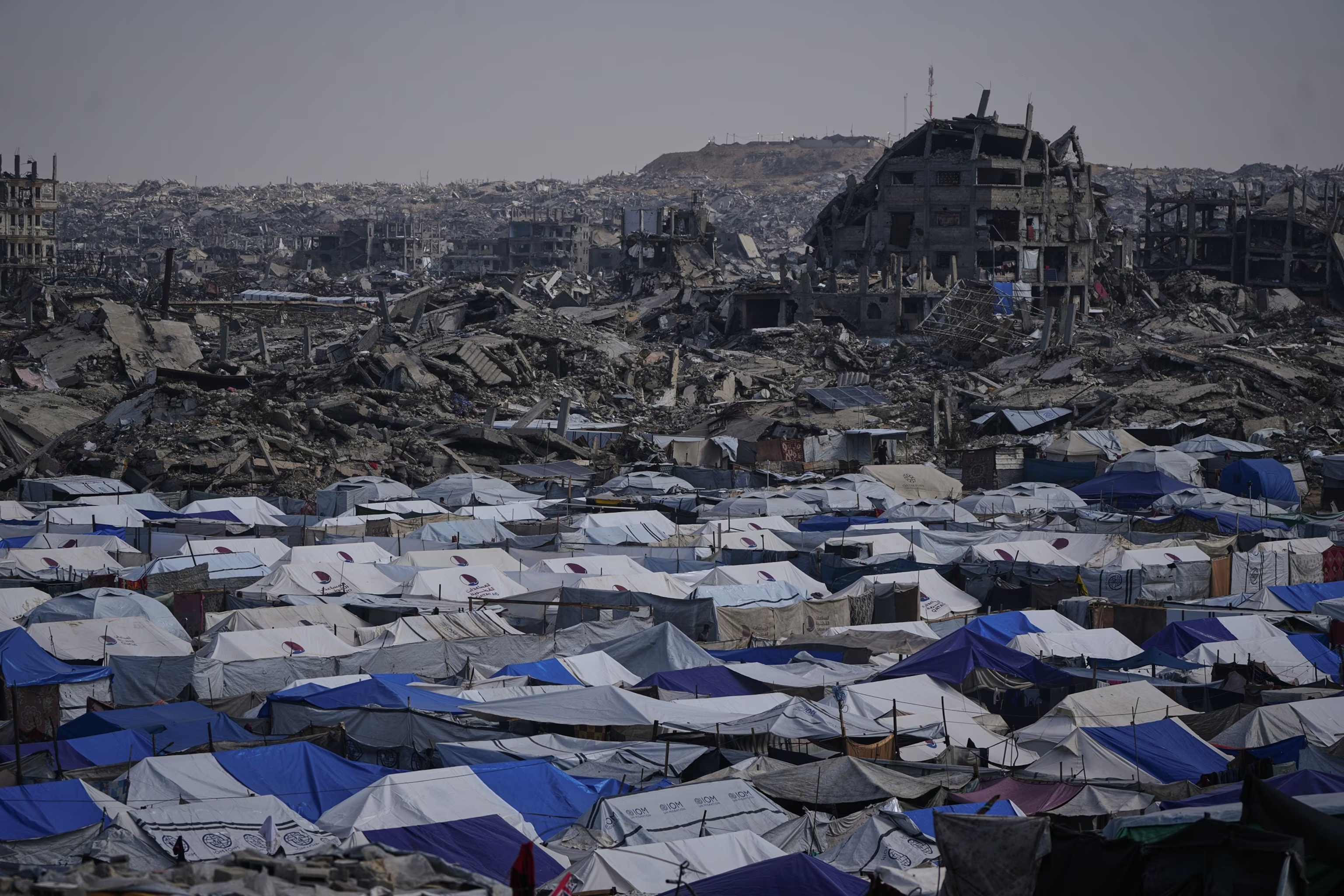

As Israel’s war on Gaza enters a new phase, major disagreements have emerged over the proposed role of an international stabilisation force (ISF), with senior Hamas official Basem Naim stating on Sunday that the US draft plan still required “a lot of clarifications.”
While Hamas is reportedly willing to discuss “freezing or storing” its weapons during the current truce, Naim stressed that it would not accept any international force taking charge of disarmament. He said the group could allow a United Nations force near Gaza’s borders to supervise the ceasefire, monitor violations, and prevent escalation, but such a force could not have “any kind of mandates” over Palestinian territory.
Naim’s remarks came hours after Israeli Prime Minister Benjamin Netanyahu announced plans to meet US President Donald Trump at the end of the month to discuss moving into the next phase of the US-backed plan. Netanyahu said the discussions would focus on ending Hamas governance in Gaza and ensuring the group complies with the plan’s call for the enclave’s demilitarisation.
“We have a second phase, no less daunting, and that is to achieve the disarmament of Hamas and the demilitarisation of Gaza,” Netanyahu said at a press conference alongside visiting German Chancellor Friedrich Merz.
It remains unclear whether Hamas’s proposal to freeze or store weapons would satisfy Israel’s demands for complete disarmament. Naim reiterated that the group “retains its right to resist”, stressing that disarmament could only occur as part of a broader political process leading to a Palestinian state, potentially accompanied by a long-term truce of five to ten years.

The US draft plan leaves the door open to Palestinian statehood, a prospect Netanyahu has repeatedly rejected, arguing it would amount to rewarding Hamas. Meanwhile, Turkish Foreign Minister Hakan Fidan stated that the proposed ISF should focus on separating Israeli troops and Hamas rather than on disarming the Palestinian group.
Despite ongoing talks, Israel’s attacks on Gaza continue, with Qatar and Egypt urging the swift deployment of the Gaza stabilisation force, warning that the ceasefire is at a “critical moment.”
According to the Palestinian Authority, more than 50 days after the ceasefire came into effect on November 30, Israeli forces had committed 591 violations, killing 357 Palestinians and injuring 903 others. These included 164 incidents of direct gunfire targeting civilians, homes, residential areas, and tents sheltering displaced families; 25 military vehicle incursions into residential and agricultural zones; 280 incidents of bombardment by land, air, and artillery; and 118 demolitions of homes and civilian facilities.
The Palestinian Authority described these actions as systematic crimes aimed at expanding destruction and collectively punishing the population, in grave breach of the Geneva Conventions.