


















Erosion: 500-yrs-old Hawaii sea arch collapses
text_fields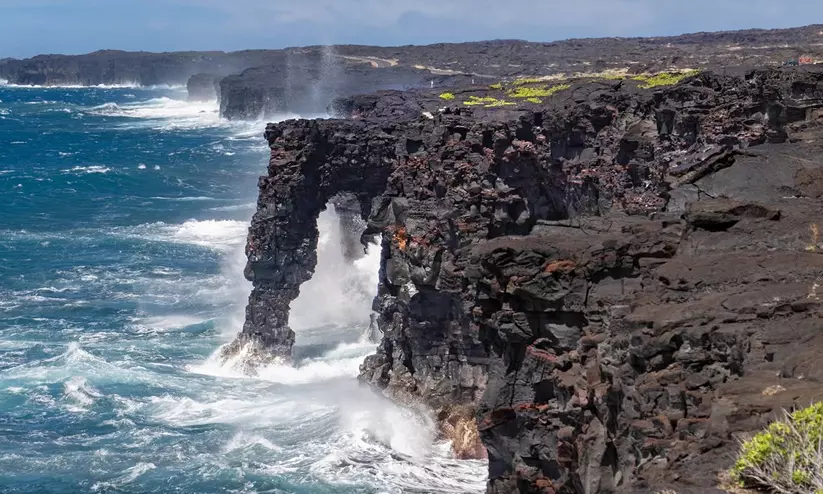

Hawaii: A centuries-old sea arch that stood as a striking landmark along Hawaii’s rugged southern coastline has collapsed into the Pacific Ocean after years of erosion and increasing instability, The Guardian reported.
The Hōlei sea arch, located inside Hawaii Volcanoes National Park on the Big Island, had towered about 90 feet above the ocean for more than 500 years. Formed naturally around 550 years ago as waves gradually eroded weaker sections of ancient lava flows, the landmark had long been considered vulnerable to eventual collapse.
The exact time of its fall remains unclear. According to the National Park Service, the arch was still intact on September 23, when the park was temporarily closed during Tropical Storm Nolo, but had disappeared by the night of September 27.
The collapse came after years of warning signs along the surrounding cliffs. The 2018 Kīlauea eruption and summit collapse triggered earthquakes that damaged the area, while fresh cracks and instability in 2020 forced authorities to shut the original viewing point and establish a safer location.
The arch suffered further damage later that year when powerful surf associated with Tropical Storm Darby tore away part of its lower section.
Its final collapse follows an unusually stormy period for Hawaii. Nolo intensified rapidly into a hurricane in late September, becoming the third major storm to strike the islands in recent months after Lala in August and Lowell in early September.
The heightened storm activity has been linked to an unusually strong El Niño, with experts warning that warming oceans and broader climate change could further intensify extreme weather across the Pacific.