














After ‘excellent conversations’ with both sides, Trump announces 10-day ceasefire in Lebanon
text_fields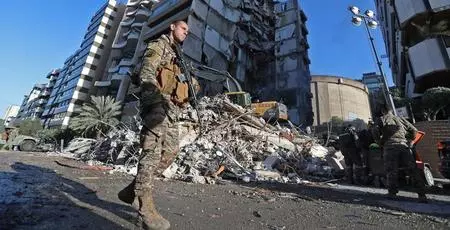

Donald Trump announced a 10-day ceasefire in Lebanon, stating that it would be followed by a meeting between Lebanese and Israeli leaders in Washington, D.C., with hopes of advancing a broader peace process linked to parallel negotiations between the United States and Iran.
The ceasefire reportedly came into effect at midnight on Thursday, after Trump held separate discussions with Lebanese President Joseph Aoun and Israeli Prime Minister Benjamin Netanyahu, which he described as positive. Israel has been carrying out extensive airstrikes in Lebanon targeting the Iran-backed Hezbollah.
Netanyahu indicated that the truce could open the door to a “historic” agreement but stressed that disarming Hezbollah remained a key condition. He also maintained that Israel would continue to enforce a 10km (6.2-mile) “security zone” along southern Lebanon’s border, The Guardian reported.
The ceasefire terms, as provided by the US State Department, forbid Israel from engaging in offensive military actions in Lebanon. However, they appear to give wider opportunity for "self-defence," including "against planned, imminent, or ongoing attacks".
Trump later mentioned that he may visit Lebanon at an appropriate time.
Lebanese authorities cautioned displaced residents against returning to southern areas due to reports of sporadic shelling even after the ceasefire began. Talks between Aoun and Netanyahu are expected to take place next week, marking what could be the first direct summit between the two sides in decades.
Although the Lebanese government has not been directly involved in the conflict with Hezbollah, a Hezbollah member of the Lebanese parliament, Hassan Fadlallah, suggested that the agreement was influenced by Iranian diplomatic efforts and indicated that the group would adhere to the truce as long as Israel halted hostilities.
The conflict escalated after Hezbollah launched attacks on Israel on March 2 in support of Iran, prompting a strong Israeli response, including ground operations in southern Lebanon. Israel has reiterated its intention to maintain a presence up to the Litani River, while Lebanon is expected to push for a full withdrawal of Israeli forces—something Israel has previously rejected.
The ceasefire is also tied to a separate, Pakistan-mediated pause in hostilities between the US and Iran, which is set to expire on 22 April.
Despite ongoing diplomatic efforts, violence continued during the talks, with Israeli strikes reportedly hitting civilian infrastructure, including an ambulance, critically injuring two paramedics and key transport links in southern Lebanon.
On the same day, Israel destroyed the final surviving bridge into Tyre, thereby isolating the 30,000 residents of one of south Lebanon's largest cities from the rest of the nation. Its forces also blew up a school in Marwahin, south Lebanon, as part of a drive to demolish entire villages in the area.
According to Lebanese authorities, over 2,100 people have been killed and thousands injured in recent weeks.