

















Jeff Bezos advises young founders to get degrees, experience first
text_fields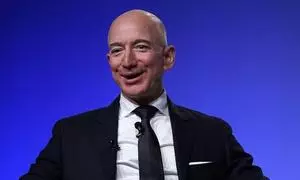

Some of the most well-known success stories in the tech world have come from college dropouts including Mark Zuckerberg, who created Facebook from his Harvard dorm in 2004, and Bill Gates, who left Harvard in 1975 to cofound Microsoft with Paul Allen.
However, Amazon founder Jeff Bezos views such examples as rare exceptions rather than a model for success. He believes that earning a college degree still carries significant value and that it isn’t necessary to start a business at a very young age. Instead, he advises aspiring entrepreneurs to first gain experience working at well-established companies before striking out on their own.
Speaking at Italian Tech Week in Turin, Bezos said that time spent at top-tier companies helps young professionals build essential skills that improve their chances of succeeding later as entrepreneurs.
He explained that working in a strong corporate environment teaches practical lessons, such as effective hiring and interviewing, which can prove invaluable when launching a business later on. Gaining such experience, he added, doesn’t slow down success but rather improves the odds of achieving it, Indian Express reported.
Jeff Bezos was 30 when he launched Amazon, after spending years building experience across different industries. He graduated from Princeton University in 1986 with a degree in electrical engineering and computer science and began his career at Fitel, a telecom startup, where he worked on debugging code. He later joined Banker’s Trust as a product manager and eventually became a vice president at D.E. Shaw, a hedge fund known for using mathematical models to forecast market trends.
Bezos has said that his time at D.E. Shaw was particularly formative, as it exposed him to the emerging potential of the internet. He recalled being struck by a statistic showing web usage growing at 2,300 per cent a year — a figure that inspired him to create an online retail business.
He credits the lessons learned in those early roles with significantly improving his chances of success, saying that the additional decade of professional experience made Amazon’s eventual success far more likely than if he had tried to start a company straight after college.
He has also spoken positively about his education, saying he enjoyed his time at Princeton and found his degree valuable, encouraging young people not to dismiss higher education.
Bezos’s comments come as the value of traditional degrees faces growing scrutiny. LinkedIn CEO Ryan Roslansky recently noted that employers are beginning to prioritise skills over credentials, particularly as artificial intelligence transforms hiring practices.
Roslansky said the most promising workers of the future will not necessarily have elite degrees but will be those who are adaptable, curious, and open to learning new tools — a shift he described as a major and exciting change in the world of work.