















India unveils Vikram-I, PM Modi says "aim is to build the world's most reliable rocket launcher
text_fields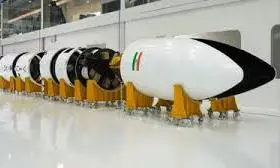

Prime Minister Narendra Modi on Thursday virtually inaugurated Skyroot Aerospace’s Infinity Campus in Hyderabad and unveiled Vikram-I, the country’s first privately developed orbital rocket.
He said India is now poised to become a global leader in satellite launch systems, calling the achievement a reflection of national innovation and credibility.
At the event, he praised Skyroot founders Pawan Chandana and Bharath Daka, saying "India has created its insignia in credibility, capacity, and value in the space sector," and described the entrepreneurs as "big inspirations for the youth of the country."
Modi highlighted that India’s private space growth is driven by government reforms that opened the sector to private participation. He said that India’s journey had begun with very little, but its goals had always been ambitious. He noted that from carrying rocket parts on a bicycle to developing the world’s most reliable launch vehicles, India had proven that the height of dreams was determined not by resources but by resolve.
The Prime Minister pointed to the new space policy, the role of IN-SPACe, and ISRO’s support as key pillars that enabled the current expansion. He said ISRO has strengthened India’s identity with its record of delivering credibility, capacity, and value in space missions.
He added that more than 300 space startups have emerged in recent years, many built by young engineers and designers with limited resources but bold ideas. PM Modi said that this had given birth to a private space revolution in India, with Gen-Z engineers, designers, coders, and scientists creating new technologies that had given the country a unique identity in the global space sector.
Modi emphasised the rising global demand for small satellites and frequent launches. He said this demand offered India a major opening, noting that global companies wanted to manufacture satellites in the country, sought help with launches, and were looking for technology partnerships. He emphasised that India must make full use of this opportunity, and added that the country’s cost-effective model had raised expectations worldwide.
He linked the private space boom to India’s wider startup growth across fintech, agritech, health-tech, climate-tech, edu-tech, and defence tech. Modi said India now has 1.5 lakh registered startups, including multiple unicorns, and that innovation has spread deep into smaller towns and villages.
He also spoke of deep-tech manufacturing, mentioning semiconductor fabrication and design hubs as key examples of India’s expanding strength. The PM said the government plans to open the nuclear sector to private players and noted that initiatives like One Nation, One Subscription are giving young people more access to global research.
He said that the coming time belonged to Indian youth and innovators, and expressed confidence that India would soon have five space-tech unicorns. He reiterated India’s aim to strengthen its launch capabilities and to make the 21st century “India’s century.”
The newly inaugurated Infinity Campus spans 200,000 square feet. Founder Pawan Chandana said the facility “would be capable of producing one rocket every month,” marking a major boost for India’s private launch capacity.
Vikram-I is Skyroot’s first orbital rocket and is designed to place satellites into orbit. Its successful deployment is expected to strengthen India’s position in the commercial launch market.
Skyroot, founded by IIT alumni and former ISRO scientists Chandana and Bharath Daka, earlier created history with the sub-orbital rocket Vikram-S in November 2022, becoming the first Indian private company to reach space.
With the Infinity Campus and Vikram-I, the company is now preparing to move from sub-orbital missions to full commercial orbital launches.