



















Great Barrier Reef sees sharpest coral decline in decades after record-breaking bleaching event
text_fields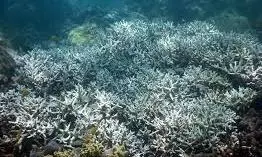

The Great Barrier Reef has experienced its most dramatic annual loss of live coral in nearly four decades, according to a new report from the Australian Institute of Marine Science (AIMS).
Scientists warn that the reef is edging closer to a tipping point, where the time between increasingly severe environmental shocks may no longer be sufficient for coral to recover.
The AIMS report provides the first comprehensive analysis of the massive bleaching event that struck the reef in early 2024 - an event now recognised as the most extensive and intense in the reef's recorded history.
Researchers have been monitoring the reef since 1986, conducting annual in-water surveys to measure coral health and cover.
Their latest findings paint a grim picture.
In the northern region, from Cooktown to Cape York, coral cover declined by 25%, primarily due to bleaching, two cyclones, and subsequent flooding. The southern section — from Mackay to north of Bundaberg — fared even worse, with a 30% loss in live coral. Both zones recorded the steepest annual declines ever observed.
The central region, though less affected by the 2024 heat stress, still saw a 13% drop in coral cover.
“It has been a pretty sobering year of surveys with the biggest impacts I have seen in the 30-plus years I have been doing this,” said Dr. Mike Emslie, who heads AIMS’ long-term reef monitoring program.
Emslie noted that coral conditions are becoming more erratic, warning that the reef’s health is increasingly unstable. “This volatility is very likely a sign of an unstable system. That’s our real concern. We’re starting to see record highs in coral cover that quickly get turned around to record falls.”
In the years leading up to 2024, coral had made promising recoveries in many areas, thanks to relatively calm weather conditions. But much of this rebound was fueled by fast-growing acropora corals, which are particularly vulnerable to heat stress.
“We had said it could all get turned around in one year and, low and behold, here we are,” Emslie said, noting that coral levels have now largely reverted to historical averages.
The 2024 bleaching disaster was part of an ongoing global coral bleaching crisis, which has so far impacted over 80% of the world’s reefs, spanning at least 82 countries and territories.
A separate study last year warned that ocean temperatures on the Great Barrier Reef had likely reached their highest levels in more than 400 years, posing what it called an “existential threat” to the UNESCO World Heritage site.