


















Earth microbes could survive in shadows near Moon’s south pole, study finds
text_fields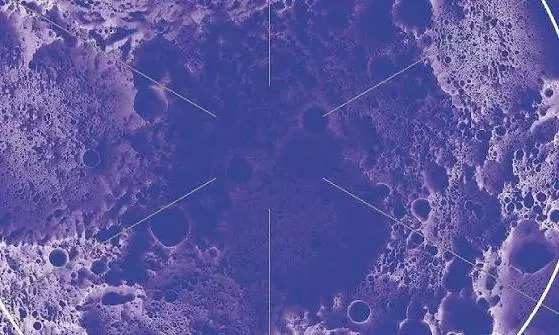

Some bacteria and fungi from Earth could survive in the extremely cold, permanently shaded regions near the Moon's south pole, raising concerns about contamination as human missions establish a longer-term presence on the lunar surface, according to a study by NASA and the University of Maryland.
The study, published in Science Advances, challenges the assumption that microorganisms carried accidentally by human explorers would be destroyed almost immediately by the lunar environment.
Researchers led by planetary scientist Prabal Saxena of NASA's Goddard Space Flight Center used elevation maps and temperature data from NASA's Lunar Reconnaissance Orbiter to model conditions across potential landing areas for the Artemis III mission.
They examined the potential survival of five common spaceflight microbes, including Staphylococcus aureus, a bacterium commonly found on human skin, and Aspergillus niger, a fungus.
The models identified "survivable niches" in shaded areas near the lunar south pole. All five microbes could potentially remain dormant for at least 24 hours in some of these locations. Aspergillus niger could potentially survive for up to a week in the cold, shaded conditions.
The findings are important for planetary protection because even dead or dormant microorganisms could contaminate lunar samples. Such contamination could complicate efforts to study the Moon's natural chemistry and identify ancient organic compounds.
"Humans are natural explorers, and with them come their voices, their memories... and their microbes," Saxena said in a NASA statement.
Co-author Andrew Needham said understanding what microorganisms humans bring to the Moon is also important for future Mars missions. Scientists searching for evidence of extraterrestrial life will need to distinguish between material that originated on another world and biological material transported there by humans.
The researchers said the findings underline the need to understand microbial contamination in extreme lunar environments before humans establish a permanent presence on the Moon.