


















Artemis 2: NASA’s historic crewed lunar flyby set for early 2026
text_fields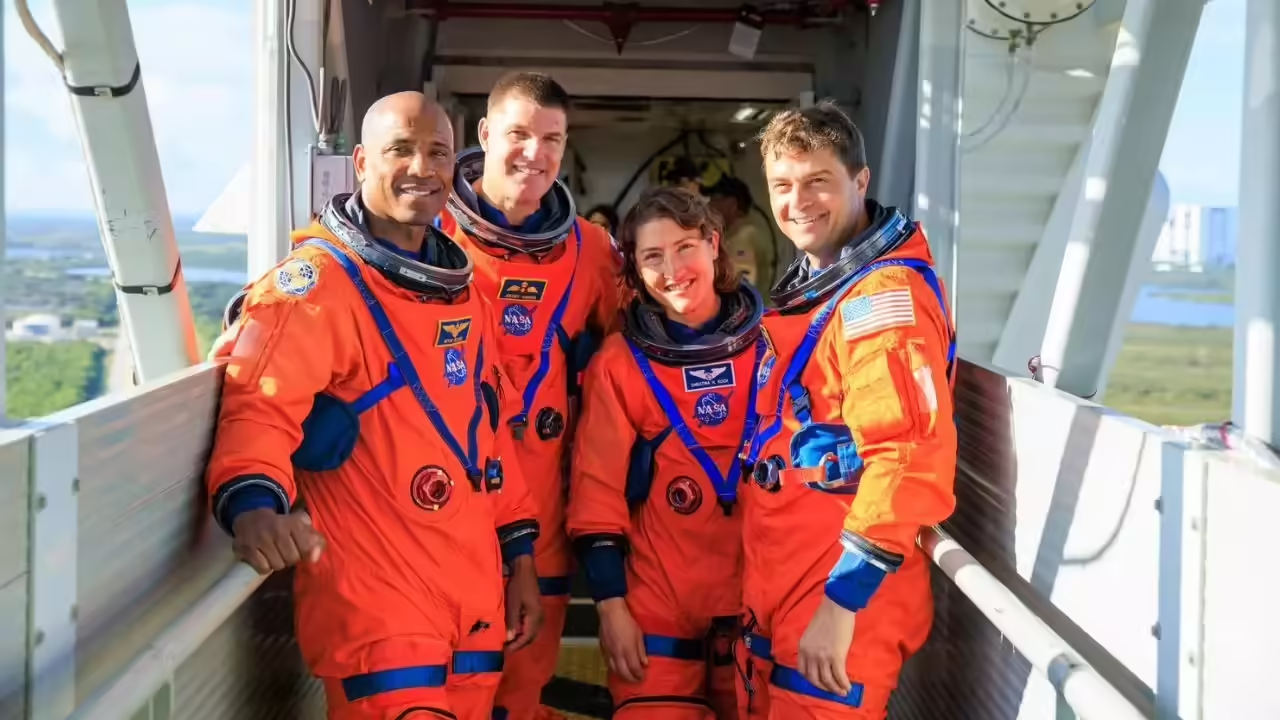

New Delhi: NASA’s long-awaited return to the Moon has been rescheduled for early 2026, with the Artemis 2 mission set to carry four astronauts on a 10-day flight around the Moon aboard the Orion spacecraft. The current launch plan offers several five-day windows in February, March and April, with 26 April 2026 marked as the final available date. If preparations stay on track, liftoff could take place as soon as 5 February 2026 — at night rather than during daylight.
“This is a front-row seat to history: we’re returning to the Moon after over 50 years,” said Lakiesha Hawkins, NASA’s acting deputy associate administrator for exploration systems development. While NASA is aiming for the earliest possible launch window, she stressed that crew safety requirements could still extend the timeline.
Artemis 2 will be the first crewed flight of NASA’s Artemis programme. Its crew consists of NASA astronauts Reid Wiseman (commander), Victor Glover (pilot) and Christina Koch (mission specialist), along with Canadian Space Agency astronaut Jeremy Hansen (mission specialist). They will launch atop NASA’s Space Launch System (SLS) rocket, following a “free-return” trajectory that takes them more than 5,000 nautical miles (9,260 km) beyond the Moon before returning to Earth without entering lunar orbit or landing.
“They’re going much farther out than previous missions, so the Moon will look a little smaller,” said Jeff Radigan, lead Artemis 2 flight director at NASA’s Johnson Space Center.
The uncrewed Artemis 1 mission in November 2022 successfully sent Orion into lunar orbit and brought it back to Earth after four weeks. However, its heat shield burned more intensely than expected during re-entry, prompting NASA to delay Artemis 2 — originally targeted for 2024 — to guarantee astronaut safety.

According to Rick Henfling, lead Artemis 2 entry flight director, engineers have since conducted detailed analyses and adjusted the trajectory to avoid the conditions that caused higher heat shield stress. Meanwhile, launch director Charlie Blackwell-Thompson said modifications to the launchpad and fuelling process will reduce the risk of hydrogen leaks that plagued Artemis 1.
Hardware for the mission is now nearing completion. The Boeing-built SLS rocket is already housed in NASA’s Kennedy Space Center Vehicle Assembly Building, with Northrop Grumman’s solid rocket boosters attached. The Orion capsule and its adapter are expected to be finished within weeks, and NASA plans to unveil the fully assembled rocket in October.
Officials emphasise that despite being crewed, Artemis 2 remains a test flight. “The success of this mission depends not only on the safe return of the crew but also on the successful execution of the lunar flyby,” Radigan noted. NASA says Artemis 2 will be a critical step toward refining operations for future Moon landings and eventually deeper-space exploration.