















‘Modern society will reject religious injunctions that makes Islam appear primitive’
text_fields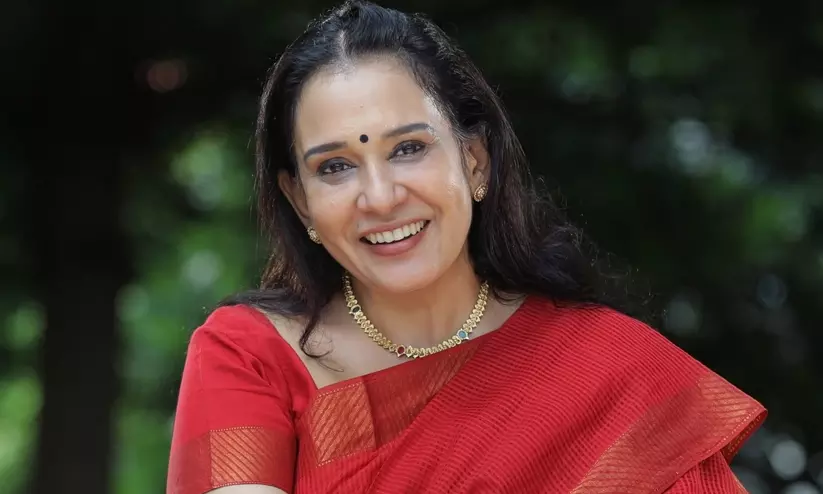

Kochi: Actress Maala Parvathi has said that modern society will reject religious injunctions that portray Islam as a primitive faith, arguing that spiritual consciousness should be used to move society forward rather than to preserve patriarchal structures.
In a detailed Facebook post, Parvathi said Islamic laws and teachings need to be understood in the context of seventh-century Arabia, the period in which they emerged. She said that, before the rise of Islam, Arabia was generally described as Jahiliyyah, or the age of ignorance, and cited historical accounts that describe the region, with the exception of Yemen, as lacking a rule-of-law system around the seventh century.
According to her, tribes formed the basic units of society and frequently fought among themselves, with force often determining power. Tribal affiliation could determine an individual's security and social status, while conflicts between tribes could continue for generations, and even minor disputes could escalate into wars.
Parvathi described Mecca as an important centre of trade and referred to accounts of attacks by nomadic groups, killings, enslavement and the seizure of women. She said men and women were bought and sold as slaves and that society was deeply unequal.
She also referred to the religious landscape of the time, saying the Kaaba was associated with idol worship and that animal sacrifice and human sacrifice existed in the region according to the historical and religious accounts she cited. Different Arab tribes worshipped different gods and idols, although Jewish and Christian communities and traditions of monotheism were also present in Arabia. She noted that monotheists nevertheless formed a minority.
The actress said slaves occupied an extremely low position in society, while poor and otherwise unprotected people faced considerable hardship. She described the position of women as particularly oppressive, arguing that women were often treated primarily as objects for sexual use rather than as people with rights.
She referred to Quranic and early Islamic sources that describe the practice of burying female infants alive among some tribes. At the same time, she stressed that this should not be presented as a universal practice among all Arab tribes. She also referred to the practice under which, according to her account, a deceased man's wives, except his own mother, could be treated as part of his inheritance and transferred to his son, using it to illustrate the extent of women's vulnerability.
It was this society, Parvathi argued, that the Prophet Muhammad sought to transform.
She recounted the Islamic tradition concerning Muhammad's first revelation in the cave of Hira. According to the account she referred to, the angel Jibreel appeared before him and instructed him to read, leaving him frightened and unable to immediately comprehend what was happening. His wife Khadija, whom Parvathi described as deeply devoted, comforted him and helped him understand the significance of the experience.
She said the revelations that followed came to Muhammad at different times and that he implemented the divine commands he received despite opposition from powerful Quraysh tribes and their leaders. According to Parvathi, he purified the Kaaba of idol worship and promoted belief in one God and knowledge of Allah, putting his own life at risk in the process.
Parvathy pointed to the persecution endured by the earliest Muslims as evidence of the brutality of the society they confronted. She specifically mentioned Sumayyah bint Khayyat, her husband Yasir ibn Amir, their son Ammar ibn Yasir and Bilal.
She said Sumayyah was among the early Muslims in Mecca and that she, her husband and son had embraced Islam despite having neither wealth nor political or social influence. This, she argued, left them vulnerable to persecution by powerful people in Mecca.
According to the Seerah traditions she cited, the family was subjected to severe torture and pressured to abandon their faith. Sumayyah, however, refused to renounce her belief. Parvathi referred to accounts of her being taken into the intense heat of the desert and tortured there. Some accounts, she said, describe her being made to wear heavy metal armour, denied water and subjected to beating and kicking to intensify her suffering.
She similarly referred to accounts of Bilal, an enslaved man who accepted Islam, being brutally tortured. Some traditions describe his skin being subjected to extreme heat and a heavy, heated stone being placed on his body.
Parvathi said these episodes demonstrated the transformation she associates with Muhammad's teachings: a society she described as engaging in degrading practices was directed towards principles of peace, morality and human dignity.
She said the Quran also contains teachings concerning physical cleanliness, sexual and personal conduct, respect for women and the protection of vulnerable people. She referred to instructions concerning appropriate interaction with women and said the Prophet taught that orphaned women should be married and protected.
According to Parvathi, Islam therefore developed not merely as a system of spiritual belief but as a comprehensive way of life. She said its teachings address matters ranging from food, clothing and personal hygiene to human conduct and spiritual development.
She argued that Muhammad's teachings addressed the various areas of life in which a person in that historical period had to make decisions, based on the knowledge and circumstances of that time, and provided guidance for society accordingly.
However, Parvathi said the same instructions cannot simply be presented without contextual interpretation when they are discussed in a 21st-century society. A modern society governed by the rule of law, she argued, has fundamentally different circumstances from seventh-century Arabia, and religious teachings need to be explained and adapted accordingly.
She said religious scholars and social reformers have an important role in this process. Spiritual consciousness, in her view, should be directed towards social progress.
Parvathi invoked the example of Sree Narayana Guru, saying his teachings and reform efforts helped liberate a large section of society from the belief that they were inherently inferior because of their caste status.
She argued that the passage of time from the seventh to the 21st century necessarily brings new circumstances and challenges. According to her, one of Islam's important strengths is that it contains a mechanism for responding to changing conditions.
She specifically referred to ijma, the Islamic principle of scholarly consensus, describing it as a form of legal or religious agreement that can be applied by Islamic scholars. She argued that this principle provides scope for religious authorities to reinterpret and reform practices in response to contemporary realities.
Parvathi said spiritual leaders should therefore be willing to use such provisions to modernise religious practices rather than attempt to preserve historical social structures unchanged.
She warned that injunctions that cause Islam to be perceived as a primitive religion would inevitably face rejection from modern society, particularly when such interpretations are directed against women.
In a democratic country, she argued, religious practices should be reconcilable with the laws of the land. If Islam itself contains principles that allow religious interpretation to respond to changing circumstances, she questioned why those principles should not be applied to develop practices compatible with modern law and society.
For Parvathi, the ultimate purpose of religion should be spiritual growth. She cautioned against reducing religion to efforts aimed at maintaining male dominance, saying such attempts would invite increasing criticism in the modern era.
She concluded that patriarchal societies continue to impose suffering on a large section of women and that changing this condition is a responsibility shared by society as a whole.