












Story of Modi's quarter century of governance
text_fields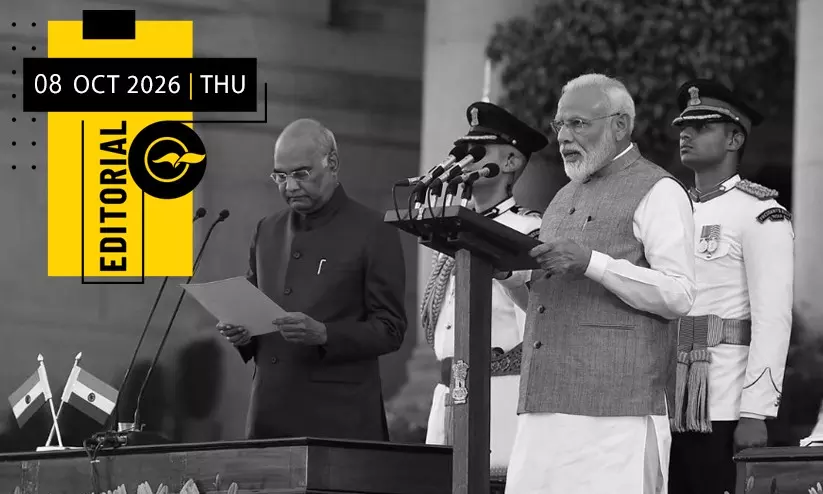

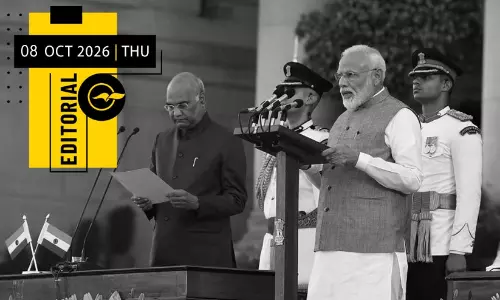
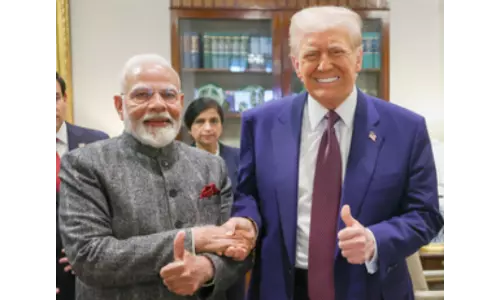
If one asks anyone other than BJP cadres and party members what Indian event marks October 7, it won't bring an easy answer. However, for the same query, BJP-Central government votaries have a quick answer - Prime Minister Narendra Modi completes a quarter of a century of public offic. He first ruled Gujarat for twelve and a half years as Chief Minister from October 7, 2001, and then as Prime Minister from May 25, 2014. There is little point in celebrating the silver jubilee by merging two completely different roles, but there is no question of propriety in personality-based following and hero-worship.
At the same time, it is natural for the contributions of the BJP and its ideological counterpart, the Rashtriya Swayamsevak Sangh (RSS), during the 25 years in India's social and cultural landscape during the 25 years, with the period that preceded Modi's rule. Some of the major achievements cited about the Modi rule are the size and growth of the economy, highway expansion, rail transport and airport development, and the reduction in the number of the extremely poor. However, the BJP's propensity is to compare the central government before and after Modi. For example, due to the development of national highways, the road network, which was 91,287 km in 2014, has expanded to 1,46,000 km today: in other words, an increase of 54,000 km. However, what gets ignored here is that the road network had expanded from 57,000 km in the previous ten years to 91,287 km by 2014. In the last decade and a half, India has made significant progress in more than one sector. One of the reasons for this is the reduction in the number of people below the poverty line. In addition, 800 million poor people, or two-thirds of the population, are receiving free food grains through the Public Distribution System. Of course there is a difference between 50 in cities and 75 percent in villages. This may also speak for a high poverty index. India's position in technology has reached its peak in the last decade. However, this should also be seen as part of the global leap in information technology where India has an edge. It is worth noting that a large part of industrial development has been achieved with the support of India's rich human potential in information technology. What makes it somewhat special is the development of corresponding market and infrastructure development in parallel. While it is said that there have been investor-friendly measures such as boosting ease of doing business, it must read in conjunction with the trend of crony capitalism, and the feature of a small section of the population grabbing a major share of the wealth as against the fall in purchasing power of the poor.
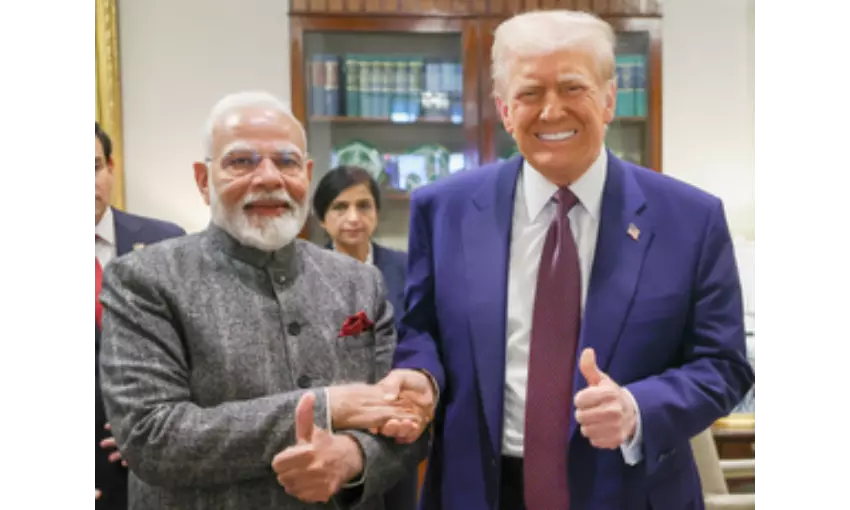
If this much is about the work of Prime Minister Modi, there is Modi the chief minister. There is praise galore about the twelve years he was the Chief Minister of Gujarat when Gujarat was promoted as a model state in development. At the same time, the question of how much unity and friendship existed among the people in terms of human development and social status, and whether the ruling establishment served as a model of democracy, the answer will be in the negative. The 2002 Gujarat massacre, one of the bloodiest incidents in the history of independent India, took place just four months after Modi came to power. According to official estimates, more than a thousand Muslims were killed in this genocide, and according to independent investigative agencies, the number is over two thousand. There were gross sexual assaults on women. Thousands were displaced from their own land. And it was during the Modi regime that in the years that followed, a a series of incidents that seriously undermined India's pluralistic unity and brotherhood also occurred. Ultimately, a nation is made up of its people and the unity and solidarity among them. If a culture emerged in which the regime and the ruling party constantly hunted down and destroyed the property and places of worship of minorities and those who express dissent and Dalits, the responsibility of this squarely rests on the same ruling dispensation. While the Prime Minister and his votaries boast that India has gained higher regard and standing aboard and among the comity of nations, reports and studies abound which reveal the unrest and insecurity of major sections of the people within the country. Celebrating the jubilee of holding power by closing eyes at such factors, and singing praise would be insulting the common sense of the people.