












New labour code: solution or problem?
text_fields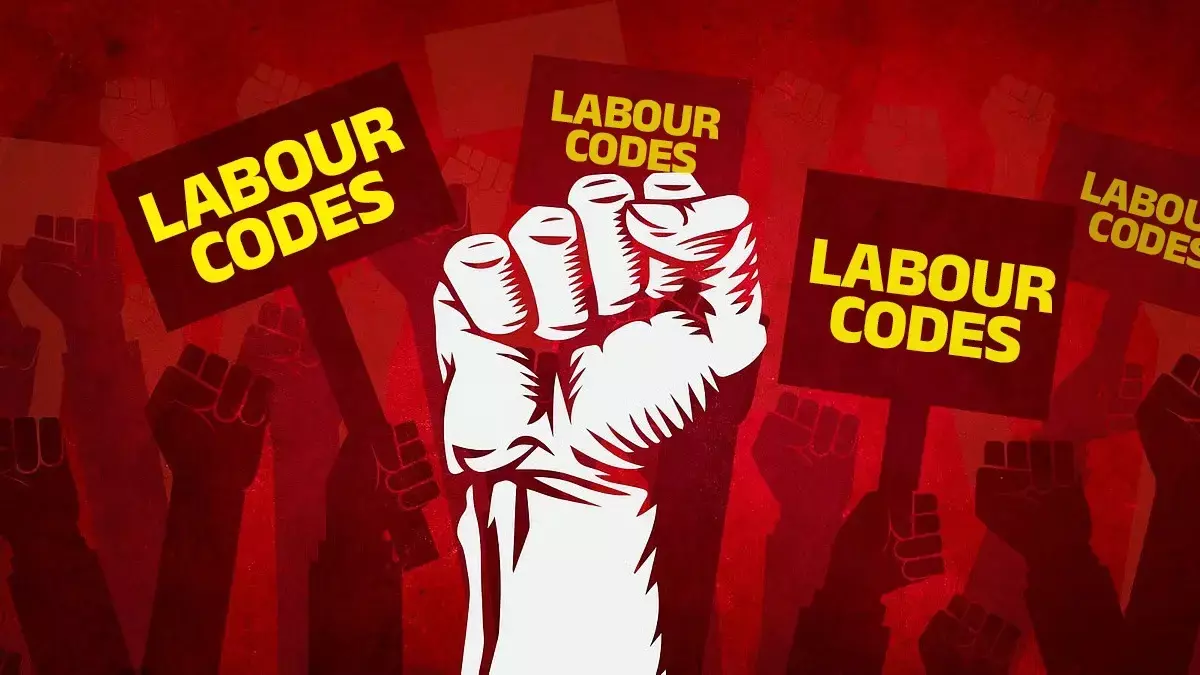

The method of the Bharatiya Janata Party government at the Centre has mostly been to move forward without considering either the people who brought them to power or the democratic systems that the nation and its citizens regard as vital. Through various bills and ordinances, rushed through to dismantle, rewrite or invalidate the administrative structures, power systems and laws that have existed since Independence, the Union government has already shown that it needs only moments to undo them. These exercises of power, which began with demonetisation, have now reached ‘vote bandi’. It is in this context that the new labour law, brought into force by the Union government the other day, must be viewed. The multiple labour laws that existed in the country have been consolidated into four comprehensive codes and brought into effect from November 21. The Prime Minister has described the new Labour Codes as the most comprehensive labour law reform since Independence. The Code on Wages, which proposes reforms to the wage system for employees, the Industrial Relations Code, which governs the industrial relations framework within establishments, the Code on Social Security, which addresses workers' social security measures, and the Occupational Safety, Health and Working Conditions Code, which concerns labour safety and workers' health protection, together have been reorganised into the new labour law. The government claims that the approach adopted here is twofold: ensuring greater safety and welfare for workers, while at the same time making operations easier for industrialists and entrepreneurs. However, the opposition and various labour unions sharply criticise the government, arguing that it is stripping workers of the rights they have held for so long and paving the way for the dominance of large corporate groups. The national-level joint platform of labour unions has called for a protest on Wednesday, the 26th.

The Prime Minister states that the objective of the Code is to free the country from colonial-era laws and create 'ease of doing' business for industrialists and producers. The new law aims to simplify procedures by replacing the existing situation, which required multiple registrations, licences and returns, with a single registration, a pan-India single licence and a single return. The law also proposes changes relating to workers' organisation, protest and strikes in matters connected with the running of establishments. The government highlights reforms such as an employment document for all types of workers, social security schemes for daily-wage earners, universal PF, ESIC and insurance benefits, statutory minimum wages for all workers, free annual health check-ups for those above 40 years of age, and allowing women to work night shifts with adequate safety measures. However, the opposition and labour unions argue that the amended laws work in favour of employers and enable labour exploitation. They point to restrictions placed on the formation of labour unions, and to the increase in the numerical threshold of workers required for regulating dismissals within establishments. They also highlight the lack of clarity regarding minimum wages and related provisions.
Even though the government claims that it prepared a draft and placed it before the public for discussion, the fact is that government has not been willing to hold an open discussion on the matter in Parliament or outside, nor has it been ready to properly listen to or accommodate the opposition or the trade unions.
The Indian Labour Conference is the national forum where the government, employers and labour unions are meant to discuss such issues and reach settlements and consensus. However, this forum has not been convened for more than the past ten years. Pointing this out, Basavaraj Bommai, the chairperson of Parliament's Labour Standing Committee, warned the Union Labour Ministry last March, but the Union government remained unmoved. This disregard is a clear indication of the unyielding and authoritarian approach of the Modi government in the consolidation of labour laws. The opposition and various labour unions opposing the new law describe it as deceptive precisely because of these opaque policy approaches.

Earlier too, when the Wage Code was introduced in 2019 and the other three laws were released in 2020, the labour unions had launched protests. On the other side, the industrial sector has expressed concern that the implementation of the new law will increase operational costs. In effect, instead of shaping a law through open discussions by taking the stake-holders into confidence, what has happened with this labour law also is the tendency to impose it unilaterally. Because of this, the worrying question that arises is whether the new law will also end up with an outcome of continuing uncertainty, just as it happened with earlier reforms.