








Has the nation seen Ujjain’s tears?
text_fields

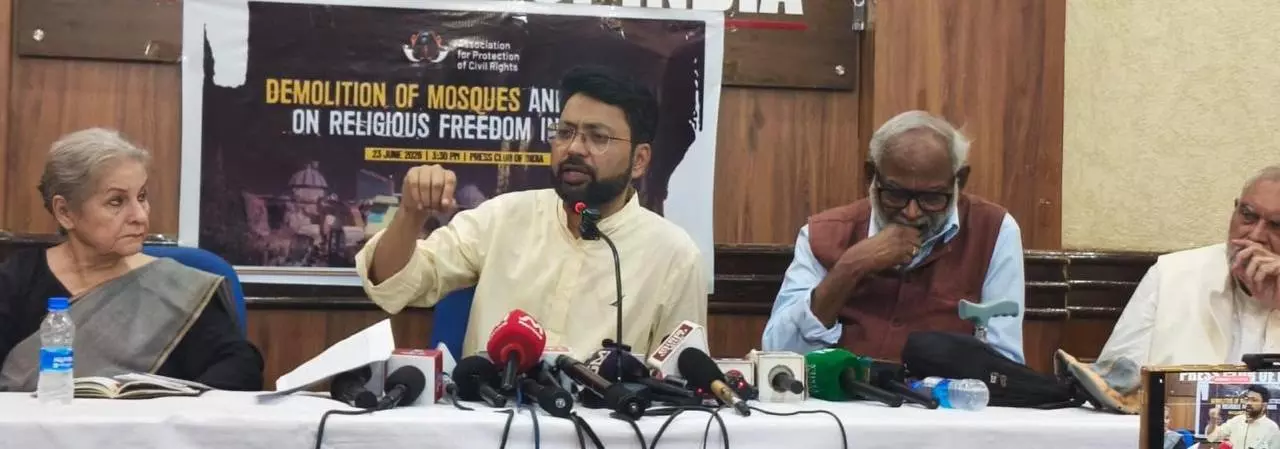
The forced demolition of a portion of the centuries-old Shahi Masjid in Ujjain, Madhya Pradesh, for widening the road from Khajur Wali Masjid to Ganesh Chowk to improve facilities for the Simhastha Kumbh Mela scheduled for 2028, is a painful example of the depth of the existential crisis faced by India’s Muslim minority. The Madhya Pradesh High Court upheld the administration’s arguments on the expected influx of devotees during the Kumbh Mela, traffic management and public safety. Rejecting all alternatives aimed at preserving the mosque’s heritage and structure, the court and the administration effectively disregarded the historical significance of a centuries-old place of worship, as well as the constitutional right of its devotees to practise their faith and their right to equal citizenship. With both the administration and the courts letting them down, the affected people were left with little choice but to compromise in the face of official pressure, despite their anguished protests. Eventually, they were able to extract a concession from the municipal authorities who agreed to reduce the portion marked for demolition from eight feet to three feet. Rather than allow bulldozers to arrive and tear apart the sacred structure, worshippers were forced to dismantle with their own hands the affected portion themselves.
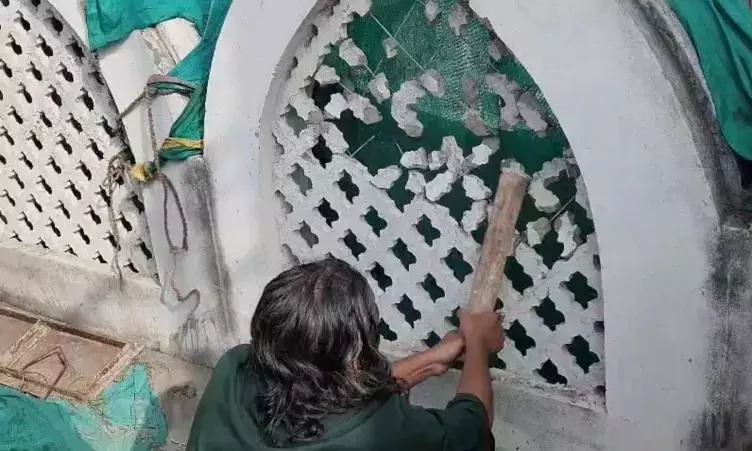
The incident is a continuation of a deliberate campaign by the Sangh Parivar to erase the presence of Muslims and historically significant Islamic structures from India’s public landscape. Across the country, mosques, dargahs and ancient structures are increasingly portrayed as illegal encroachments or obstacles to development and are subsequently demolished following court orders. Over the past six years, more than 2,000 mosques, madrasas and dargahs have been demolished by various government agencies in the name of development and encroachment removal. Uttar Pradesh, Uttarakhand, Gujarat, Delhi, Maharashtra, Madhya Pradesh, Rajasthan, Telangana and Assam have witnessed widespread bulldozer actions of this kind. In Uttarakhand, 538 Muslim places of worship were demolished, while 108 dargahs were razed. As noted in an investigation by Amnesty International, central, state and local authorities have been using bulldozers as a form of “collective punishment” against Muslims who participate in protests. It was the legal interpretation delivered by former Chief Justice D.Y. Chandrachud, even while the Places of Worship (Special Provisions) Act, 1991 remained in force, that stripped away the protection afforded to places of worship existing prior to August 15, 1947, and fueled further acts of demolition. When constitutional safeguards from the judiciary weakened, magistrate courts and High Courts have increasingly issued orders endorsing demolitions without adequate restraint. The Supreme Court, too, has not shown the urgency needed to prevent or regulate such actions. The judiciary’s apparent inaction in the face of the existential challenges confronting Muslims and the discriminatory policies of Sangh Parivar-aligned governments is further eroding the last remaining avenues of hope for marginalised communities seeking protection.

It was in front of the courts that the violence orchestrated to undermine the anti-NRC protests unfolded openly, even as courts remained witness to the developments. Yet those who continue to languish behind bars without trial include figures such as Sharjeel Imam and Umar Khalid, rather than those who publicly carried guns and opened fire on the streets. The silence of major political parties over the demolition of the mosque in Ujjain is the latest example of their failure to openly challenge legal and administrative discrimination against Muslims. On the other hand, a committee constituted under the Union Home Ministry to study 'demographic changes' has asked states to provide religion-wise data covering issues ranging from birth rates to property ownership over the past 15 years. The constant atmosphere of fear and suspicion surrounding minority communities, coupled with the erosion of their confidence, aspirations and heritage, is increasingly becoming a norm. The state’s double standards are also evident in the way it responds to the basic right to protest against discrimination. At Jantar Mantar - a designated space for public demonstrations against government injustice - police launched a harsh crackdown on a mass protest organised by Muslim leaders against voter deletions under the nationwide SIR exercise and the demolition of places of worship. National and state-level leaders as well as Opposition MPs were detained by force, while several others were placed under house arrest. The time is long overdue for a mass resistance against the state-led persecution that is pushing India’s Muslims into a state of complete ‘non-citizenship’ on their own soil, by demolishing historic mosques and monuments to erase their visible presence, and by stripping away their voting rights and legal protections.