















Green concerns in the Aravalli range
text_fields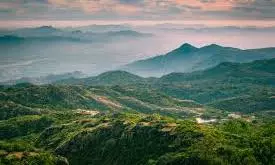

The Aravallis play a crucial role in maintaining the ecological balance of northwestern India. Spanning across Rajasthan, Haryana, Gujarat, and the National Capital Region of Delhi, the region has recently come into focus following the Supreme Court’s November 20 verdict on long-standing mining activities, followed by the Central government’s December 24 order banning mining. These developments have sparked a nationwide movement to save the Aravallis. The range is vital to the country’s ecological system. It helps prevent desertification, supports rich biodiversity, recharges groundwater qualifiers, and provides essential ecological services to millions of people. However, as seen in many mining regions across the country, large-scale illegal mining continues here, further worsening the environmental crisis.
Also read: No study says only 9% of Aravallis above 100 metres: forest survey of India
The current legal battle and controversy began in 1992, when environmental activist M.C. Mehta filed a petition against illegal mining in the Aravallis. This led to a series of landmark decisions over the years. In 1996, unauthorized construction in the Aravalli region of Delhi was completely banned, followed by a total ban on mining in the Delhi area in 2002. The court also directed action against illegal mining in Rajasthan and Haryana. By 2009, mining across the entire Aravalli range was declared illegal. The court’s verdict last month and the government’s order issued on Dec 24 mark the culmination of these long-standing legal proceedings.
Also read: Rajasthan’s Save Aravalli intensifies; protesters clash with police
The joint committee’s main recommendation, which has been endorsed by the court, is that mining may be permitted in areas outside the zones of mountains that are above a height of 100-metres in the Aravallis. However, such permission should be granted only after a thorough environmental impact assessment. Further, mining must be completely prohibited in ecologically sensitive areas, including protected forests, water bodies, tiger reserve corridors, water recharge zones, and the National Capital Region of Delhi. The recommendation also states that no new mining leases should be granted until comprehensive mapping of the entire region is completed.
Also read: Sonia Gandhi claims govt has 'nearly signed death warrant' for Aravalli hills
Although the committee’s recommendation, approved by the court, has been broadly accepted, environmentalists remain concerned that it could allow unrestricted mining in areas below the 100-metre mark. They fear that mining contractors may fail to comply with the conditions and safeguards outlined in the ruling. The Supreme Court itself acknowledged that one reason for granting conditional permission was the concern that illegal mining might continue if mining were banned altogether. As a result, many believe that the verdict attempts to balance environmental protection with regulated mining in the Aravallis. Supporters also argue that the minerals extracted are essential for various industries and everyday products.
Also read: You will be in trouble if Aravalli or PLPA touched, SC warns Haryana
Since the 100-metre limit includes not only the vertical height (peak) of a hill but also its slopes, there is still uncertainty about whether all such areas will fall under mining activity. If they are included, mining would not be permitted there. At the same time, the government now argues that if the distance between two hills is less than 500 metres, they should be treated as a single unit, meaning mining would not be allowed in that area either. However, in Rajasthan alone, there are 12,081 hill slopes above 20 metres, of which only about 1,048 rise above 100 metres - just 8.7 percent. This means that the remaining areas could potentially be opened up for mining. People are deeply concerned about what they are witnessing around them: hills are disappearing, and fragments of them are spreading across both small and large roads. If the low-lying land-forms on the earth’s surface vanish, the natural systems connected to them will also be disrupted. Therefore, mining permissions should be granted only after a Sustainable Mining Management Plan (MPSM) is developed, in strict compliance with the court’s directions.
Also read: Andhra Pradesh issues NOC to Vedanta’s Cairn for onshore oil and gas wells
Out of the total area of 1.44 lakh square kilometres, only about 0.19 percent of the Aravallis is actually suitable for mining. The real challenge, however, lies in stopping illegal mining. If it is not curbed, the desert of Rajasthan will continue to expand, groundwater levels will keep declining, and the seasonal rivers formed by channelising of rainwater will disappear. The mountains that hold the soil together will erode, causing farmlands to dry up. The hills that act as natural barriers against dust storms will vanish, making respiratory diseases increasingly unavoidable. Countless plant and animal species will be lost, and the delicate balance of nature will be irreversibly disturbed. The courts and the government must also reflect on the long-term disasters that await if there is no collective and determined effort to eliminate the destructive mining practices responsible for these consequences. It is in view of all this that nature lovers and residents of the affected regions are raising their voices to protect the Aravallis from the mining mafia. This is a demand that cannot be ignored by any authority that truly values the country’s geography and the lives of its people.