














Spain won the World Cup, FIFA lost its moral authority
text_fields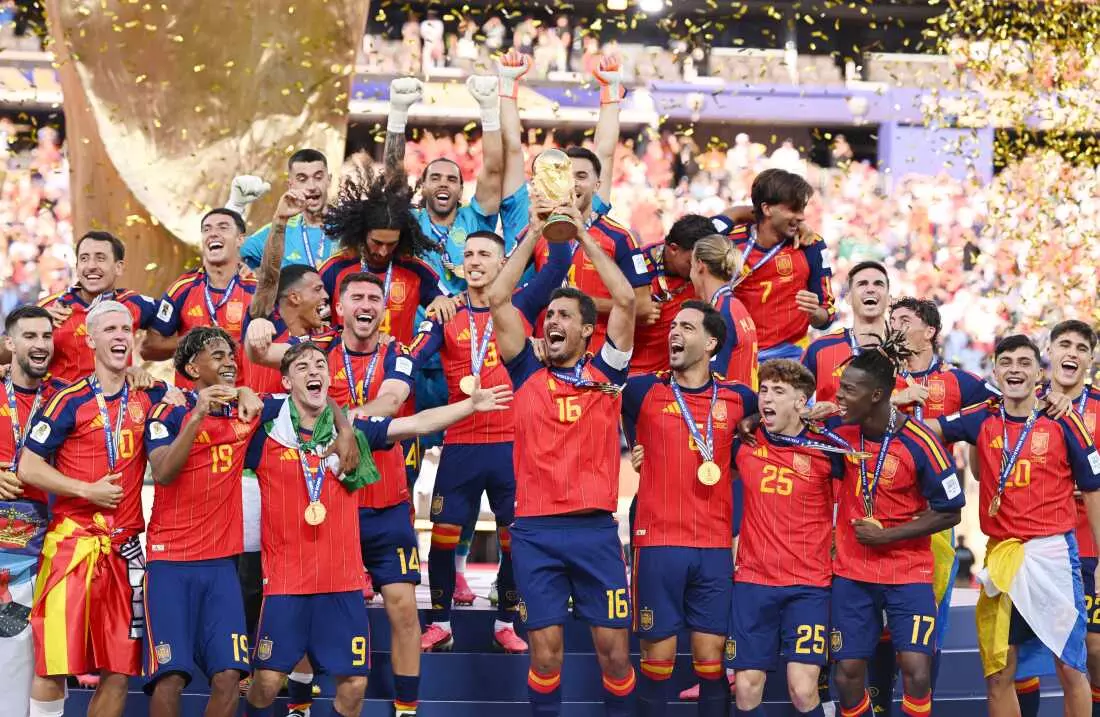

Spain deserved to win the 2026 FIFA World Cup.
From the opening match to the final whistle, it played the tournament's most complete football. Patient without being predictable, disciplined without sacrificing imagination, Spain eventually overcame an extraordinary Emiliano Martínez, whose goalkeeping almost single-handedly kept Argentina alive. Ferran Torres' extra-time winner settled the final, while Lionel Messi embraced 19-year-old Lamine Yamal in a poignant passing of the torch between two generations of football greatness.
Those are the moments that should define this World Cup.
Instead, the tournament also exposed uncomfortable truths about FIFA and the widening gap between the values it proclaims and the standards it applies.
FIFA likes to describe football as the world's game. It speaks the language of neutrality, inclusion and universality. Every qualified nation, it says, belongs on football's biggest stage on equal terms.
The 2026 World Cup suggested otherwise.
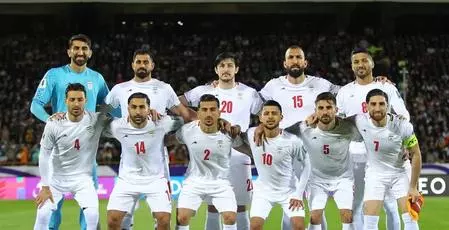
No team illustrated that contradiction more clearly than Iran.
Iran earned its place at the tournament on merit, just like every other participant. Yet unlike other qualified teams, it faced extraordinary logistical obstacles because of U.S. visa restrictions. The Iranian delegation based itself in Mexico and travelled to the United States for matches rather than operating under the same conditions as most other teams. Visa problems also affected officials, journalists and supporters, limiting participation in an event that FIFA insists belongs to the entire world.
None of this was Iran's doing.
Nor was it solely the responsibility of the United States.
FIFA chose the hosts. It awarded the tournament knowing that immigration policies and geopolitical tensions could directly affect participation. Once a country qualifies, FIFA has a responsibility to ensure that every team competes under conditions that are as equal as reasonably possible. Instead, it largely treated the matter as someone else's problem.
That response reflected a broader pattern.
Russia remained excluded from international football because of its invasion of Ukraine. Israel, despite the devastation in Gaza and sustained international calls for sporting sanctions, continued to participate in World Cup qualifying.
Reasonable people will disagree about whether either decision was justified.
The more difficult question is whether the governing principle is being applied consistently.
International institutions derive their legitimacy not simply from the decisions they make, but from the consistency with which they make them. If FIFA believes that armed conflict or violations of international law can justify excluding one state from competition, it must explain why similar standards do not apply elsewhere. If it believes sport should remain separate from politics, then that principle should also be applied consistently.
Selective neutrality is not neutrality.
It is politics by another name.
That perception has consequences extending far beyond football. Across much of the Global South, there is a growing belief that international institutions often apply one standard to powerful states and another to everyone else. Whether discussing international law, human rights or global governance, accusations of double standards have become increasingly common. During this World Cup, FIFA did little to challenge that perception. If anything, it reinforced it.
The symbolism extended beyond questions of sanctions.
Throughout the tournament, FIFA President Gianni Infantino appeared increasingly comfortable alongside political leaders, particularly U.S. President Donald Trump. Heads of state will always attend major sporting events, and host governments inevitably play an important role in their success. But the visible closeness between FIFA's leadership and political power raised legitimate questions about whether the organization has become too willing to blur the line between sporting governance and political theatre.
That was unfortunate because the football deserved better.
This was, in many respects, an outstanding World Cup. Spain played magnificent football. Messi reminded us why he remains one of the greatest players the game has known. Yamal confirmed that football's future is in exceptional hands.
Those are the memories supporters should carry home.
FIFA, however, should leave this tournament with different memories.
It should ask whether a governing body that speaks so often about universality can continue to tolerate unequal access to its own competition. It should ask whether neutrality means applying the same principles to every conflict or simply avoiding difficult decisions. And it should ask whether the world's most popular sport can continue to claim moral authority if its governing institutions appear increasingly selective in the values they choose to defend.
Spain won the World Cup.
Whether FIFA emerged with its credibility intact is a far more difficult question.