










No curtain could hide India’s poverty from the world
text_fields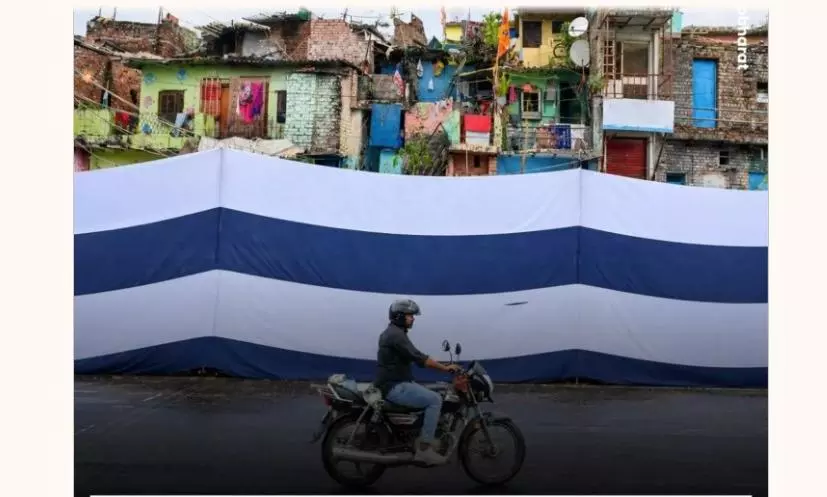
The first time I went to China, I discovered that even money could have a political identity. I had to buy Chinese currency with US dollars. But the currency given to foreign tourists was different from the currency used by Chinese citizens. Foreign Exchange Certificates, or FECs, were meant for foreigners. They could be spent only in designated shops.
It was not merely a financial arrangement. It was one of the ways in which a closed society kept foreigners within a separate world. Foreigners could travel in China, but their economic interaction with ordinary citizens was restricted.
I heard similar stories about North Korea. Whenever a foreign delegation visited Pyongyang, it was said, the visitors were taken to shops stocked with imported food, chocolates, biscuits and other confectionery. The purpose was to create an impression of plenty in a country that had experienced famine and severe food shortages.
These experiences taught me something about authoritarian governments: they are often as concerned about what foreigners see as about what their own citizens see. India was different.
A foreigner in India could travel almost anywhere, take photographs, make documentaries and films, and meet ordinary people. We did not have a system of officially prescribed sights through which foreign visitors had to be taken.
There was even a debate when a film was made about the ghotul system in Bastar. It is a traditional youth commune where tribal boys and girls live together, interact freely and, according to custom, can choose their life partners. The debate was about whether such cultural practices should be exposed to outsiders.
But the larger Indian tradition was clear: we did not have to hide India from the world. That is why I was surprised when I first saw poverty being hidden behind curtains.
It happened during Chinese President Xi Jinping’s visit to Ahmedabad on September 17, 2014. Green-and-white curtains were reportedly put up along parts of the route taken by Xi and Prime Minister Narendra Modi, including areas leading to the Sabarmati Ashram and riverfront. Critics said the screens were meant to conceal slums and poor neighbourhoods from the visiting President.
At the time, I thought it was an aberration, perhaps the over-enthusiasm of municipal officials who wanted Ahmedabad to look presentable. Little did I realise that such cosmetic treatment could become a recurring practice.
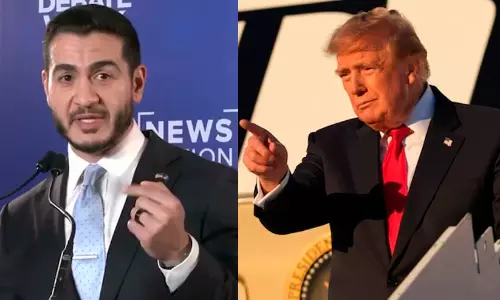
When US President Donald Trump visited Ahmedabad in February 2020, a wall reportedly about seven feet high, topped with grills and curtains, was erected along his route from the airport to the Motera stadium. It blocked the view of Saraniya Vaas, a slum inhabited by more than 2,000 people. The official explanations included security, cleanliness, and beautification. Critics saw the barrier as an attempt to prevent visitors from seeing poverty. This was becoming a habit.
The practice continued during the G20 Summit in Delhi in 2023. Green screens and other barriers were erected along roads used by visiting leaders, including around slum,s. Residents complained that the barriers restricted their movement and visitors' daily earnings. Open drains and garbage remained behind the screens.
The latest example came during the BRICS Summit in New Delhi. Blue-and-white curtains, about 10 feet high, were erected along VIP routes to screen Coolie Camp from foreign delegates. The settlement is home to sanitation workers and daily-wage earners.
The residents had a simple complaint. The government had found the money to put up curtains but had not found the will to solve the problems behind them.
Entrances and exits were reduced to a few points. Workers found it harder to take their carts and vehicles out. Their earnings suffered. Open drains and uncollected garbage remained where they were.
The curtain was new. The poverty was not.
A few years ago, I visited the Statue of Unity in Gujarat. It had cost about Rs 3,500 crore and had overtaken the Statue of Liberty in height. I was curious to see it.
There is one fundamental difference between the two statues. The Statue of Unity was a government initiative. The Statue of Liberty was a gift from the people of France to the people of the United States. The pedestal and related work in New York were supported by public contributions in America, with Joseph Pulitzer using his newspaper to encourage readers to donate.
On my way to the Statue of Unity, I noticed something that disturbed me more than the monument impressed me. I saw a government high school in a pathetic condition. The building looked as though it could collapse at any time. I wondered whether we had our priorities right.
What is the value of a magnificent monument if children nearby have to study in unsafe schools? I also noticed a green curtain hiding a densely populated settlement. Again, the contrast was striking.
The government had built massive infrastructure around the Statue of Unity. Yet visitors were not numerous enough to keep the hotels and restaurants busy. The state government began holding Cabinet meetings there. The Centre has also been using the location for important national events, including the decision to hold the National Film Awards ceremony there.
The real issue, however, is not the Statue of Unity. It is our attitude towards poverty. India cannot hide poverty behind curtains indefinitely.
Prime Minister Narendra Modi can legitimately claim credit for one of the world’s largest food-security programmes. The government says the PM Garib Kalyan Anna Yojana provides free foodgrains to more than 81 crore people.
But there is a contradiction in taking pride in feeding so many poor people while simultaneously trying to prevent foreign visitors from seeing poverty. If poverty exists on such a vast scale, why should we be ashamed of showing it?
Nor can we claim that India is on the way to becoming the world’s third-largest economy and, at the same time, behave as though poverty is something that must be covered up.
A country’s development is not measured only by the height of its statues, the width of its expressways or the grandeur of its airports. It is measured by the condition of its schools, hospitals, housing, sanitation and public spaces.
Any visitor to Delhi can see the contradiction. Cows block traffic. Plastic waste piles up. Garbage is found even in front of schools. Open drains remain in neighbourhoods. These things cannot be hidden from every visitor by putting up curtains. And why should they be?
Poverty is not a crime committed by the poor. It is a challenge to the government and society. The right response to poverty is not a curtain. It is a policy.
India wants to be a global power. It wants to become the world’s third-largest economy. It wants foreign leaders to admire its achievements. All that is legitimate.
But greatness does not come from hiding weaknesses. It comes from having the confidence to acknowledge them and the determination to overcome them.
Respect does not come easily. You have to earn it. If we continue to put up curtains whenever an important foreign visitor arrives, we may soon need factories to manufacture green, blue, and white cloth—not to create jobs, but to hide our poverty.