








US confronts Israel over surveillance of allied forces at joint Gaza operations base
text_fields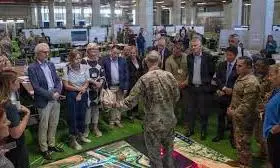

Concerns over Israeli surveillance inside a joint operations base in southern Israel prompted the US commander, Lt Gen Patrick Frank, to summon an Israeli counterpart and insist that the recording of US and allied forces must stop.
The base, known as the Civil Military Coordination Center or CMCC, was established to support aid delivery and security planning for Gaza under Donald Trump’s 20-point ceasefire plan, but tensions have risen over alleged monitoring of meetings and activities involving US personnel and partners.
Sources said Israeli operatives had been carrying out extensive surveillance inside the CMCC, including open and covert recording of conversations. Staff from several countries advised colleagues not to share sensitive information due to the risk that it could be collected and misused.
The Israeli military said that it documents meetings in which it participates through standard protocols and rejected claims that it was gathering intelligence on its partners. It said conversations inside the CMCC are unclassified.
The CMCC began operations in October to monitor the ceasefire, coordinate humanitarian aid, and draft plans for Gaza’s future. Although the agreement required increased aid to Gaza, Israeli restrictions on essential goods such as food, medicine, and water purification chemicals have continued.
Diplomats involved in the centre’s work said persistent negotiations there have led to some modifications on Israel’s list of banned or restricted items. Even basic supplies like tent poles and school materials, such as pencils and paper, have faced unexplained bans.
While the centre includes military planners from the US, Israel, the UK, and the United Arab Emirates, Palestinians have been excluded from all discussions.
Attempts to bring Palestinian voices into meetings through video links were repeatedly cut off by Israeli officials. Internal US planning documents refer to Palestinians only as Gazans. Israel has presented the CMCC as a bilateral initiative between itself and the US, although multiple countries have offices inside the building.
Several dozen US personnel originally sent to boost aid flows left within weeks after finding that Israeli controls, rather than logistical challenges, remained the main barrier to increasing humanitarian supplies. Diplomats and aid workers have expressed concern that the CMCC mixes military and humanitarian work without a clear international mandate and that discussions about Gaza’s political future exclude those directly affected.
The base is located in Kiryat Gat near the Gaza border in a building previously used by the Gaza Humanitarian Foundation. Its interior has been redesigned with informal meeting areas, where soldiers, diplomats, and aid officials attempt to navigate sensitive political and humanitarian issues.
Some fear that disengaging would allow decisions about Gaza’s future to be driven solely by Israel and newly arrived US officers who have a limited understanding of the territory. Others question how much of the planning will ever be implemented, given Israel’s position that no next stage of the ceasefire can begin until Hamas is fully demilitarised, a goal that neither the US nor its allies have a clear plan to achieve.