













Trump's meeting with Syria’s new leader marks major geopolitical shift in the Middle East
text_fields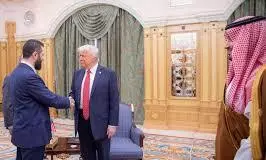

U.S. President Donald Trump met with Syria's interim President Ahmad al-Sharaa during his current Middle East tour, a development widely seen as a major turning point in the region’s geopolitical dynamics.
Ahmad al-Sharaa, formerly known as Abu Mohammad al-Jawlani, has a long and controversial past.
Once a leading figure in terrorist networks such as Al Qaeda and ISIS, al-Jawlani had been designated a global terrorist by both the United Nations and the United States as early as 2013. He was implicated in terror financing, arms trafficking, and recruitment for extremist groups, working closely with former Al Qaeda leader Ayman al-Zawahiri and ISIS chief Abu Bakr al-Baghdadi.
In the wake of Syria's 2011 uprising, al-Jawlani formed the Al-Nusrah Front, a group later rebranded as Jabhat Fatah al-Sham and eventually Hay’at Tahrir al-Sham (HTS). The group’s objective was the overthrow of Bashar al-Assad’s long-standing regime and the establishment of an Islamic state.
In a swift and unexpected military campaign in late 2024, HTS seized control of major territories, ultimately forcing Assad to flee to Russia and ending over five decades of authoritarian rule.
By January 2025, al-Jawlani, now going by the name Ahmad al-Sharaa, was declared Syria's interim President.
The meeting between Trump and al-Sharaa, held in Saudi Arabia, led to the announcement that the United States would lift all sanctions on Syria. These sanctions, imposed in 1979, had labeled Syria a "State Sponsor of Terrorism" for its alliance with groups like Hezbollah and support for Iran’s regional influence.
The U.S. move to remove sanctions signals a dramatic policy reversal and indicates Washington’s willingness to engage with Syria's new leadership.
Trump stated that Syria, under al-Sharaa, "deserves a chance at peace," and urged the new President to focus on national rebuilding, commit to expelling foreign militants, and consider joining the Abraham Accords, the normalisation agreements between Israel and several Arab nations.
Saudi Crown Prince Mohammed bin Salman played a key role in orchestrating the meeting, further underscoring Riyadh’s growing influence in regional diplomacy. Trump acknowledged the Crown Prince's behind-the-scenes efforts, indicating strong Saudi support for the newly formed Syrian government.
Turkey’s President Recep Tayyip Erdoğan also joined the discussion via a phone call, signaling Ankara’s interest in the new Syrian leadership. Gulf nations are now rallying behind the al-Sharaa government, viewing it as a potential counterweight to Iranian dominance in the region.
However, not all responses have been positive.
Israel expressed serious concerns about the U.S. legitimising a former extremist leader, urging caution and restraint. Despite this, the Trump administration has so far remained silent.
Syria's Foreign Ministry has celebrated the meeting as a "pivotal turning point" and welcomed the end of economic sanctions as a chance for national recovery. In an official statement, the Ministry said, "This is a vital opportunity for Syria to achieve stability and rebuild, under the leadership of and for the Syrian people."