

















India-Oman CEPA opens duty-free trade and regional export opportunities
text_fields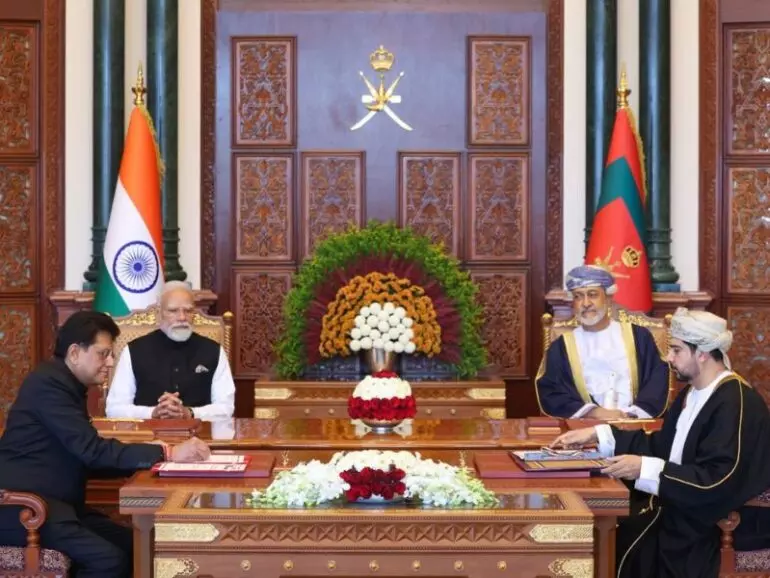

Omani manufacturers and traders can access cheaper Indian supplies and wider export opportunities under the India–Oman Comprehensive Economic Partnership Agreement, with ports and free zones positioned to support distribution across the Gulf and East Africa.
The agreement extends beyond tariff reductions to cover services, investment, professional mobility and regulatory cooperation. It entered into force on June 1, 2026.
An analysis by Ashick KP, an educator and accredited management teacher with AIMA Delhi, examines how the pact supports Oman Vision 2040 by connecting industrial development with international trade.
The paper identifies access to India’s economy, which it values at $3.7 trillion, as an opportunity for Omani entrepreneurs and importers to diversify supplies, reduce input costs and develop businesses serving regional markets.
It also places Oman’s Arabian Sea ports at the centre of potential manufacturing and re-export activity as companies reassess shipping arrangements amid geopolitical tensions and disruption in the Red Sea.
Tariff concessions and export access
Oman has offered duty-free access on 98.08 per cent of its tariff lines, covering 99.38 per cent of Indian exports by value.
The concessions allow Omani businesses and consumers to source eligible industrial inputs, consumer goods and technology products without customs duties.
India has offered tariff liberalisation on 77.79 per cent of its tariff lines, providing preferential access for eligible Omani exports, including petrochemicals, fertilisers, aluminium and industrial products.
India retains safeguards for sensitive sectors such as dairy, food grains and edible oils. These protections concern India’s import commitments. The document’s separate claim that dairy and grains are broadly exempt from Oman’s tariff cuts should not be read as an equivalent Omani exclusion.
The agreement builds on centuries of commercial and maritime ties, beginning with trade in spices and textiles. Bilateral trade reached $10.61 billion in the 2024–2025 financial year.
Manufacturing, healthcare and food supplies
Reduced duties on raw materials and machinery could lower costs for Omani manufacturers and infrastructure projects while improving their competitiveness.
Chemical and energy exporters gain opportunities in India’s industrial market. Omani factories can also benefit from duty-free imports of eligible organic chemicals.
In healthcare, the pact provides faster regulatory pathways for medicines approved by recognised authorities, including the US Food and Drug Administration and European Medicines Agency.
These procedures remain subject to regulatory conditions and documentation rather than automatic clearance. Cooperation on traditional medicine and health services also creates opportunities involving India’s AYUSH systems.
Food-processing businesses can benefit from preferential access to eligible agricultural products, processed foods, meat and seafood. These supplies could support local processing and food-security planning.
Certification and professional services
Acceptance of certificates issued by India’s Export Inspection Council is intended to reduce unnecessary repeat testing and inspections at Omani ports.
Cooperation on halal certification, agricultural safety and organic standards would also reduce compliance barriers and simplify trade procedures.
Oman has made market-access commitments across 127 services subsectors, including information technology, engineering, accounting, healthcare and higher education.
Professional mobility and intra-company transfer provisions would help businesses access specialist expertise and support investment partnerships. The agreement also provides opportunities for full foreign ownership in specified service sectors.
More than 6,000 Indian establishments already operate in Oman. The official description refers to establishments rather than confirming that all are bilateral joint ventures.
Oman’s regional distribution role
The analysis identifies Sohar, Duqm and Salalah and their free zones as locations where businesses can combine imports with manufacturing, processing and value addition before exporting to other markets.
Oman’s position between the Arabian Gulf, Indian Ocean and East Africa gives companies access to several regional trading routes. Its Arabian Sea ports offer alternatives to journeys through key maritime chokepoints, although geography alone cannot guarantee uninterrupted supply chains.
For Omani investors, the commercial opportunity therefore extends beyond importing Indian goods. Local production and processing could retain greater value in the Sultanate while supporting exports to GCC economies and East African markets.